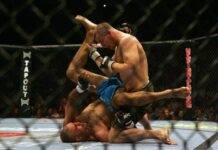
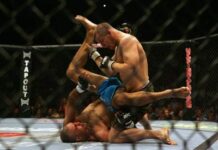
Dana White has seen it all. He’s been courtside in the NBA Finals. He’s sat in the stands for Super Bowl Sunday. He’s watched heavyweight title fights in Las Vegas and big playoff matchups. But according to the UFC president, nothing quite compares to the main event.
White claims the Ultimate Fighting Championship is the peak of sports entertainment.
It’s a bold statement for an organization that nearly died in the late 1990s. The UFC almost folded. Then it reinvented itself. Now it attracts millions of fans globally. It bills itself as the premier Mixed Martial Arts (MMA) organization. Its history is a mix of highs, lows, and constant controversy.
The Rules of Engagement
The UFC organizes, promotes, and hosts these events. Each event features several bouts. A bout is a fight between two competitors.
Like boxing, rounds have a time limit. A referee supervises the action. But MMA is far more complex than a standard boxing match.
Standard UFC bouts last three rounds. Championship fights go five rounds. Each round is five minutes long. Fighters get a one-minute break between rounds.
Boxing restricts athletes to fist strikes above the belt. The UFC allows punches, kicks, elbows, and knee strikes. Takedowns are legal. Submissions are the goal. Fighters can strike above and below the belt, with few restrictions.
Early on, the UFC marketed its events as no-holds-barred (NHB) fighting. That term is a misnomer. Even the earliest fights had rules. Fighters had to follow them.
- No gouging eyes.
- No fish hooking opponents.
- No strikes to the groin.
The Nevada State Athletic Commission regulates these exhibitions. They identify 31 specific fouls. Committing a foul can mean a penalty or disqualification.
Not all fouls involve physical violence. Holding the fence is a foul. Using abusive language inside the octagon is a foul. Faking an injury is a foul. Dropping your mouthpiece to delay the fight is a foul.
Drug Testing and Integrity
The UFC follows the Nevada State Athletic Commission’s drug policy. Recreational and performance-enhancing drugs are strictly forbidden.
Fighters who test positive before a bout cannot fight. They face disciplinary action. If a winner tests positive later, the commission can change the result to a no contest.
Where Does It All Happen?
The next section covers the basics of the UFC. It looks at where fights take place.
For more questions on sports and athletic performance, visit Sharecare.com.
UFC Basics
Why the UFC Octagon Design Matters for Fighter Safety and Strategy
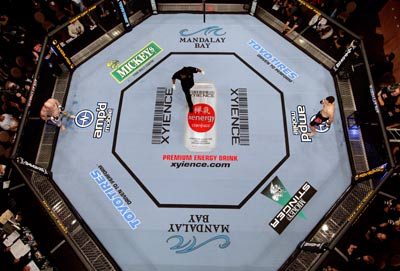
Forget the ropes. In professional boxing, the ring boundaries are defined by taut cables. In the UFC octagon, you are enclosed by a chain-link fence. This isn’t just an aesthetic choice; it fundamentally changes how fights are won and lost. The structure is an eight-sided cage, thirty feet across, with walls constructed from heavy-duty fencing material. Every corner and edge is padded to protect fighters who get thrown or pushed against the boundary.
Inside, the floor is a canvas mat. It’s custom-painted for every single event and then discarded. There is no reuse. This ensures consistent traction and hygiene for each card. Access is strictly controlled. Two gates allow entry, but they are locked tight before the opening bell.
“When a fight is in progress, only the referee and the two fighters are allowed inside.”
This isolation is absolute. No one else touches the mat. If you are bleeding, you cannot leave until the round ends. If you are gassed, you cannot step out. The cage forces a different style of fighting. Grappling becomes viable because there is nowhere to run. You can pin an opponent against the wire. The fence becomes a tool, not just a barrier.
Between rounds, the dynamic shifts. Corner men rush in. The gates open. These seconds are critical. Trainers shout adjustments. They wipe blood. They give water. The referee stays out of the corner’s business, letting the team manage the crisis until the bell rings for the next round.
Why an Octagon?
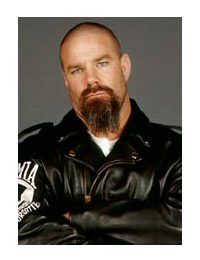
You can’t leave the cage mid-fight. And you can’t try to hurl your opponent over the fence like a sack of potatoes. Tank Abbott tried that against Carl Worsham at UFC 9. It didn’t work. The rules are clear: stay inside the Octagon.
So why the shape? Dana White says it’s about fairness. The original UFC wanted to pit styles against each other. Boxing uses a square ring. Wrestling uses a circle. Martial arts disciplines favor specific geometries. The Octagon removes the advantage. The angles are wider than boxing corners. A fighter can’t get pinned in a dead corner with no escape route. The fencing stops falls. It’s stable. It’s safe. Fans get a good view.
No Rankings, Just Fight Night
There are no official UFC rankings. Dana White thinks ranking systems invite corruption. They get in the way of booking the best fights. Instead, Joe Silva handles matchmaking. The vice president and matchmaker analyzes styles and records. He decides who fights. Prove yourself enough. Get a title shot. Simple.
Weight Classes Explained
The UFC recognizes five divisions. You fight people in your class. You can move up or down if you want.
- Lightweight: 145 to 155 pounds
- Welterweight: 155 to 170 pounds
- Middleweight: 170 to 185 pounds
- Light Heavyweight: 185 to 205 pounds
- Heavyweight: 205 to 265 pounds
Moving up means gaining weight. Usually, you sacrifice speed. Moving down risks losing striking power. It’s a constant trade-off.
Striking Techniques
Fighters use three main categories: striking, grappling, and ground fighting. Let’s break down the strikes.

How Striking Rules Shape UFC Fights
The visuals in the Octagon tell one story, but the rules write the script. Striking isn’t just throwing hands. It’s punches, kicks, knees, and elbows woven together. Fighters pull from everywhere. You’ll see boxing footwork mixed with Muay Thai clinch work. It’s a hybrid sport by design.
But the gear changes the physics.
UFC fighters wear those signature fingerless gloves. They weigh 4 to 6 ounces. Compare that to boxing gloves, which sit at 8 to 10 ounces depending on the weight class. The difference is huge. Thin gloves mean less padding. Punches land harder, but so does the risk of hand injury. You have to be careful. Throw too hard with thin gloves, and you might break your own hand before you break your opponent’s jaw.
Then there are the restrictions. You can’t just go wild.
If your opponent is down, you can’t kick their head. Knee strikes to a grounded head are a foul. Downward elbow strikes are out too. And the back of the head? Off-limits. The sport wants to protect fighters, not just entertain them with brutality. Those rules force strategy. You can’t just pummel a grounded opponent into oblivion. You have to work around the guard.
The Art of the Takedown and Submission
Not everyone wants to stand and trade. Some fighters prefer to drag you into the dirt.
Grappling is a whole different beast. A takedown forces the opponent to the ground. Defending it takes balance. A sprawl uses leverage to keep you on your feet. It’s simple physics. Shift your weight back. Drive hips down. If you do it right, the takedown fails.
Takedowns look flashy. Think slams. Suplexes. But they don’t have to be. Sometimes it’s just knocking someone off balance. That’s enough to shift the momentum.
Once you’re on the ground, the stakes change.
Good grapplers don’t just pin you. They look for submissions. A guillotine choke can end a fight instantly. You tap or you black out. Most submissions happen on the mat. But don’t assume you’re safe standing up. Some holds work from a vertical position. A standing guillotine is a nightmare if you aren’t paying attention.
Ground Fighting Dynamics
When the fight hits the canvas, the strategy shifts again.
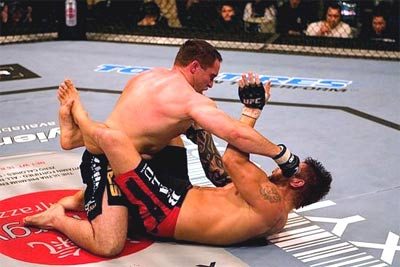
The ground is where fights get ugly. And interesting. And decisive.
In boxing, if you hit the canvas, the bell usually rings. In kickboxing, similar rules often apply. Not in the UFC. When a fighter hits the mat, the clock keeps ticking. The action doesn’t stop. It just changes geometry.
On the floor, two things happen. Strikes. Or submissions. The striking variety goes by the name ground and pound. It’s exactly what it sounds like. One fighter pins the other and rains down elbows, knees, or fists. The submission variety involves locking in chokes or joint breaks. You tap, you lose. You don’t tap, you might pass out or break something.
To survive this chaos, you need position. And position is everything.
Usually, the dynamic settles into one fighter on top, one on the bottom. But the terminology matters. It tells you who has the advantage.
If Fighter A is on the back and has their legs wrapped around Fighter B’s hips, Fighter B is said to be inside Fighter A’s guard. It’s a defensive shell. A trap.
Other positions define the hierarchy of dominance:
- Guard : The bottom fighter uses their legs to control the top fighter’s posture. It’s not just defense. It’s a launching pad for sweeps and submissions.
- Half Guard : A middle ground. One fighter has one leg trapped, the other free. It’s precarious. Both fighters are fighting for full control.
- Side Control : The top fighter is perpendicular to the bottom fighter. They are safe from most submissions. They can strike. They can advance to mount.
- Full Mount : The ultimate dominance. The top fighter sits on the bottom fighter’s chest, legs spread wide. The bottom fighter can’t move. The top fighter has free reign to strike or transition to a rear-naked choke.
These aren’t just labels. They’re tactical zones. Understanding them separates the fans who watch the chaos from the ones who watch the chess match.
Training for the Octagon
You can’t just be a striker. You can’t just be a wrestler.
To be successful in the UFC, you must train in all three techniques extensively. Striking. Grappling. Submission defense.
Most fighters have a home. A preferred style. A wrestler who loves the takedown. A boxer who wants to stay on the feet. But the modern MMA landscape doesn’t forgive specialists.
Almost all current champions and contenders have at least a basic working knowledge of other techniques. If you’re a striker, you need to know how to defend a takedown. If you’re a grappler, you need to know how to survive on your back without getting smashed in the face.
The gap between styles is closing. The fighter who relies on one skill set is an easy target. The fighter who can adapt is dangerous.
Determining the Winner
So, how does the fight actually end?
If it’s not a knockout, and it’s not a submission, we move to the judges.
Judges score each round based on three criteria:
- Effective Striking and Grappling : Who landed the cleaner shots? Who controlled the position on the ground?
- Aggression : Who moved forward? Who forced the
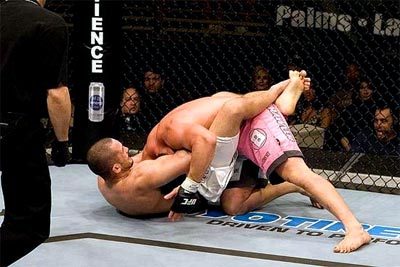
Striking and grappling are the tools. The victory conditions are the only thing that matters.
You might think dropping an opponent is enough. It isn’t. You have to make them quit or make the ref stop it. There are two main ways to end a fight cleanly.
The Art of Giving Up
First, there is the submission.
This happens when your opponent physically taps out. Or they verbally submit. It is rare to see a verbal tap. Usually, it is a hand slapping the mat. Or the opponent.
Why do they tap?
They are caught in a hold they cannot escape. An armbar hyperextends the elbow. An ankle lock twists the joint past its breaking point. The pain is too much. Or worse, the threat of injury is real.
Submitting is considered honorable in MMA.
In boxing, you keep fighting until you cannot stand. In football, giving up ends your season. Not in the UFC. Tapping out is respected. It shows you know your limits. You protect your body.
There is one exception. A rear naked choke.
This is not just about pain. It cuts off blood flow to the brain. It cuts off air. The opponent blacks out. They do not tap. They pass out. The fight ends instantly.
This is a knockout via submission. It is clean. It is final.
When the Ref Steps In
Then there is the technical knockout (TKO).
This is not a punch that drops someone. It is the referee deciding the fight is over.
The ref watches closely. They look for defense. Can the fighter defend himself intelligently?
If the answer is no, the fight stops.
Boxing has a standing eight count. MMA does not. If a fighter is hurt, even slightly, the ref can step in.
This can happen standing up. A fighter is staggering. He is taking heavy shots. He has no answer. The ref waves it off.
It can also happen on the ground. A fighter is pinned. He is not trying to escape. He is just taking damage. The ref sees the hopelessness. He stops the clock.
Referees work in chaos. Conditions change in seconds. They have to judge instinctively.
This is not a judgment call based on stats. It is a safety call.
Winning is simple. Make them tap. Or make the ref stop it. Everything else is just noise.
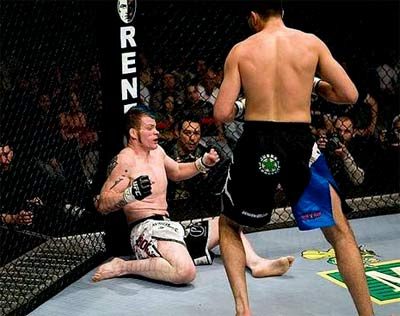
When the bell rings for the final round and nobody has tapped out or been knocked unconscious, the fight moves to the judges’ scorecards. This is where the 10-point must system comes into play. It’s simple on paper but messy in practice. The winner of a round gets 10 points. The loser gets nine or less.
Why the lower score? Usually because a fighter was inactive. Maybe they were timid. Or maybe they got penalized for a foul. Each judge tallies their scores for all rounds. If all three agree on the winner, it’s a unanimous decision. Clear cut.
But what happens when they don’t agree?
That’s where things get interesting. If two judges pick one fighter and the third picks the opponent, you have a split decision. It’s controversial by nature. Then there’s the majority decision. Two judges vote for a winner while the third calls the bout a draw. It’s a win, but it feels shaky.
You can also win by technical decision if your opponent is too hurt to continue after an accidental foul. Referees can also hand out wins via disqualification for rule violations. Sometimes a fighter just forfeits due to illness or injury. You get the win without throwing a single punch.
Draws are possible too. A standard draw happens when the judges’ scores cancel out. A technical draw occurs if both fighters are injured and can’t go on. A no contest is declared if both fighters break rules or if an injury from a foul ends the bout prematurely.
With so many outcomes possible, UFC fights stay unpredictable. A match might look one-sided while standing. Then it hits the ground. The dynamic shifts completely. A fighter can escape a bad position or capitalize on a tiny mistake. The momentum flips in seconds.
Scoring in the UFC is harder than in boxing. Judges look at more than just strikes. They count takedowns. They evaluate ground control. Usually, the top position wins the round. But not always. If a fighter on the bottom defends well enough, a judge might still award them the round.
Dana White has been vocal about the subjectivity here. He says the main job is to judge who did the most damage. Round by round. It’s not a perfect science.
The next section will dive into the controversial history of the UFC.
For more on sports and athletic performance, check Sharecare.com.
UFC History
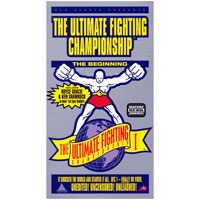
The Origin of a Brawl: How Gracie and Davie Built the UFC
Rorion Gracie didn’t just want to teach martial arts. He wanted to prove them. An expert in Brazilian jiu-jitsu (BJJ), Rorion ran a family school built on one brutal premise: techniques had to work in a real fight. Style was useless. If you couldn’t use it to survive, it was garbage.
He teamed up with Arthur Davie, an ad guy who saw dollar signs in violence. The Gracies were already legends thanks to “the Gracie Challenge.” It was an open invitation. Any fighter from any style could step up and try to beat a Gracie or their student in a no-holds-barred ring. They won most of them.
Davie took that concept to the Semaphore Entertainment Group (SEG). His pitch was simple. Put masters of karate, kickboxing, boxing, and jiu-jitsu in a cage. Let them fight. See who comes out on top. It was a tournament designed to answer one question: which discipline is actually best for combat?
Legend has it SEG employee Michael Abramson came up with the name. The Ultimate Fighting Championship.
On November 12, 1993, SEG debuted the first event. It would later be known as UFC 1.
Royce Wins the First Title
The first event was a tournament. If you won, you moved up. If you lost, you went home. Davie even had alternates ready in case someone got injured or refused to fight. The lineup was a mess of styles. You had sumo wrestlers facing off against boxers and karate masters.
Then there was Royce Gracie.
Rorion’s younger brother. Small. Fast. Invisible to many of his opponents until it was too late.
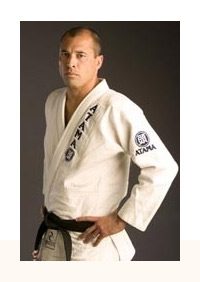
Royce fought his way through the bracket. In the final bout, he caught Gerard Gordeau. A rear naked choke. The fight ended. Royce won the tournament.
It was a massive success. SEG didn’t hesitate. They immediately started planning more. They kept the Ultimate Fighting Championship name. They started numbering the events sequentially. UFC 2 was next. Then UFC 3.
The brand was born.
The Unintentional Sport
Early UFC events were a far cry from the polished product we watch today. There were no weight classes, meaning a lightweight jiu-jitsu practitioner could find themselves locked in a grapple with a Sumo wrestler. The sport didn’t even define weight classes until UFC 12, and even then, the categories were tweaked repeatedly as the organization figured out what worked. Fighters were allowed to wear traditional gear, like a gi for Brazilian Jiu-Jitsu. Rounds had no fixed duration, and some events had no limit on the number of rounds. The goal was simple: fight until someone won. Clear winner. Clear loser.
The “style versus style” concept faded quickly. Most fights hit the mats, and many of the disciplines represented had little to no ground game. Royce Gracie won three of the first four tournaments, proving that if you can’t control the fight on the ground, you lose. Fighters adapted. They added wrestling. They added submissions. The black belt label lost its shine; the UFC realized pretty fast that a black belt didn’t automatically make you a good fighter.
Rules were an afterthought. The UFC held events in states without athletic commissions just to avoid regulation. There were no judges. When judges were finally added, the criteria for scoring were murky. Referees couldn’t even stop a fight initially. Their job was just to enforce the few existing rules and witness submissions. It took a few events before the UFC gave referees the actual authority to stop a bout for fighter safety.
Structure changed, too. Except for UFC 9, which was just a series of single matches, everything up to UFC 18 used a tournament format. Fighters had to survive multiple bouts in one night. From UFC 18 on, with the exception of UFC 23, it was single matches. No more double-headers for the athletes.
According to Dana White, the whole thing was an accident. “That show [the first Ultimate Fighting Championship event] was only supposed to be a one-off,” he said. “Well, it did so well on pay-per-view they decided to do another, and another. Never in a million years did these guys think they were creating a sport.”
The UFC added rules gradually, trying to appease critics and legitimize what was becoming mixed martial arts. But timing was terrible. SEG was drowning in debt. From UFC 23 to UFC 29, SEG hovered on the brink of bankruptcy. They couldn’t afford to release these events on home video. The golden era was slipping away due to poor financial management.
Courting Controversy
SEG marketed early UFC events as brutal spectacles. No holds barred. Every fight ended in a clear winner. They claimed the best martial art would rise to the top. By hyping the violence, they invited the wrath of critics.
Senator John McCain was the most vocal opponent. A boxing fan, he called UFC fights “human cockfighting.” He pushed state governors and city governments to ban the events. Venues backed out last minute. Fights got moved. The backlash was real.
The UFC resisted working with state athletic commissions for years. SEG doubled down on the “primal sport” angle, which only made things worse. Cable companies refused to carry the pay-per-views. SEG’s options shrunk to nothing. By the time they adopted the rules of the New Jersey Athletic Control Board, it was too late to save the company.
“Never in a million years did these guys think they were creating a sport.” — Dana White
The Fertittas Take Over
In 2000, SEG promoted UFC 29: Defense of the Belts. It was the last event they would produce. Bankruptcy. Political pressure. Booking nightmares. The company was dead in the water.
Enter Zuffa, LLC. Frank Fertitta III and Lorenzo Fertitta bought the UFC. Zuffa is Italian for “to fight” or “to scrap.” Dana White, former amateur boxer and fight promoter, became president.
Lorenzo Fertitta had ties to the Nevada State Athletic Commission. Soon, the commission oversaw UFC events. This gave the organization the credibility it desperately needed. Cable companies started carrying the pay-per-views again. The sport was back on life support, but the heart was beating.
The Zuffa Takeover and Rebranding Efforts
It started with UFC 30 in 2001. This was the first event under Zuffa’s ownership, airing from the Boardwalk Hall in Atlantic City. The stakes were high. We saw the promotion return to wider pay-per-view distribution for the first time. Home video production came back too. But the real story here wasn’t just about distribution. It was about image.
Dana White knew the brand needed a overhaul. The old perception was too messy. Too brutal. White has been relentless in shifting that narrative. He doesn’t want fans seeing savages. He wants athletes.
“At the end of the day, these guys aren’t barbarians the way they were sold early on. These guys are all good guys . . . they come in to compete to find out who’s the best fighter in the world.”
That quote matters. It defined the new era. The goal was simple. Increase popularity. Shed the “barbarian” label. Make the sport look competitive rather than chaotic.
How The Ultimate Fighter Changed Viewing Habits
Fast forward to 2005. The landscape shifted again. Spike TV picked up the first season of “The Ultimate Fighter.”
This wasn’t just another fight night. It was a reality TV series. The format was straightforward but effective. UFC hopefuls lived together. They split into camps. Each week, one fighter from each team stepped into the cage. Winner stays. Loser goes home.
Why did this work so well?
It broke the pay-per-view barrier. For the first time, casual viewers could watch UFC action on basic cable. Spike TV gave fans a way to engage without spending $40 on a single event. It educated the audience. It explained the rules. It built characters out of unknown fighters.
The show became a training ground and a marketing machine simultaneously. It proved that the sport could be digestible for a mainstream audience.
What’s Next for the Promotion?
The momentum didn’t stop there. “The Ultimate Fighter” was already scheduled for at least two more seasons at that point. The formula was working.
As we move forward, the focus shifts from survival to expansion. The foundation has been laid. The image is cleaner. The audience is growing.
Now comes the harder part. Scaling that success. What does the future look like when the reality show engine is in full gear?

The End of the Border: UFC and Pride Merge Dreams
Dana White didn’t just talk about it. He made it happen.
In March 2007, the Fertitta brothers pulled off a move that sent shockwaves through the combat sports world. They bought Pride Fighting Championship. That’s the big Japanese org. The rival. The place where legends were forged before the UFC became the global juggernaut it is today.
Fans had whispered about a dream match for years. The best of Pride vs. the best of UFC. Now, White says that dream is closer to reality than ever. Plans are early stages. Very early. But the direction is clear. We are finally going to see who truly rules each weight class.
This isn’t just about ego. It’s about expansion.
The UFC is headquartered in Nevada. That’s home. But the company is aggressively campaigning to hold fights outside its comfort zone. International dates are no longer a pipe dream. They are on the calendar.
Why go global? White has a specific strategy for building a grassroots fan base. He doesn’t just want viewership numbers. He wants word of mouth.
“When you take the live event somewhere and you get 15,000 or 20,000 people to show up to the event… they talk to their relatives. They talk to their friends. It starts to spread…that whole word of mouth thing happens, and it’s imperative for the growth of the business and to take it global.”
Live events are planned for Europe. Japan. Canada. Mexico. The goal is simple. Fill the room. Let the energy spill out onto the street.
Breaking Down the UFC Entry Cost
You want to see it in person? Be ready to pay up.
The average ticket to a UFC fight costs about $208. That’s the baseline for most major events. But if you know where to look, you can find seats for as low as $64. It depends on the event. It depends on the location.
For those watching from home, the options are plentiful. Pay-per-view runs about once a month. You can catch bouts on The Ultimate Fighter. Special “Fight Night” events air on Spike TV. DVDs are available.
But there’s a gap. Events 23 through 29 are still not available commercially. If you’re hunting for footage from those specific dates, you’re out of luck for now.
Why Is MMA Actually Legal Now?
Confusion persists. People still ask if MMA is illegal.
It isn’t. It’s one of the fastest-growing sports in the U.S. today. The UFC popularized it on a massive scale. They introduced legions of fans to the sport.
As recently as 2016, states like New York lifted their bans. The stigma is fading. The athleticism is undeniable.
So what is MMA, really? It’s not just brawling. It’s a hybrid combat sport. It pulls techniques from multiple martial arts. Boxers. Wrestlers. Judo experts. Jiu-jitsu specialists. Karate practitioners. Muay Thai fighters. All of it mixed into one cage.
The Financial Peak: Who Holds the Bag?
If you’re wondering who reaps the rewards of this growth, look no further than Conor McGregor.
As of this writing, McGregor is the richest UFC fighter. His estimated net worth sits at $120 million. That number reflects the sheer power of the brand. The global reach. The integration with Pride. The push into international markets.
The landscape of mixed martial arts has shifted. The borders are dissolving. The best are finally getting their chance to prove who is king.