Dana White doesn’t mince words. He’s been to the NBA Finals. He’s sat courtside at the Super Bowl. He’s watched heavyweight boxing matches in Vegas that had the whole city holding its breath. According to the UFC president, none of those events compare.
Not even close.
The UFC claims the throne as the premier Mixed Martial Arts (MMA) organization. It’s a bold statement. The history behind it is messy, filled with near-death experiences in the late 90s, massive reinvention, and a fanbase that grew from underground curious onlookers to a global legion.
So what makes it tick?
How UFC Rules Differ from Boxing and Kickboxing
The UFC organizes, promotes, and hosts events packed with bouts. Each bout is a straight-up fight between two competitors. On the surface, it looks like boxing. There are rounds. There’s a referee. But stop there. That’s where the similarity ends.
Standard fights last three rounds. If you’re fighting for the championship belt, you get five. Every round is five minutes long. You get one minute to rest, breathe, and hear your coach scream instructions through the cage fence.
Boxing is limited. Fists only. Above the belt. The UFC throws the rulebook out the window—or rather, rewrites it completely.
Competitors can use punches, kicks, elbows, and knee strikes. They can execute takedowns. They can submit you until you tap out. Strikes are legal above and below the belt, though with specific restrictions.
There’s a persistent myth that early UFC was no-holds-barred (NHB). That’s a misnomer. Even back when the sport was young and wild, there were rules. Athletes had to follow them.
- No gouging eyes.
- No fish-hooking (using fingers to rip open an opponent’s mouth).
- No strikes to the groin.
It wasn’t a lawless brawl. It was structured chaos.
What Counts as a Foul in the Octagon?
The Nevada State Athletic Commission regulates the sport in Nevada. They identify 31 specific fouls. Break those rules, and you get penalized. Do it badly enough, and you’re disqualified.
Violence isn’t the only way to foul.
You can foul by holding the fence to pull yourself up. You can foul by using abusive language inside the ring. Faking an injury? Foul. Dropping your mouthpiece on purpose to kill time? Foul.
The commission also enforces a strict drug policy. Recreational drugs? Banned. Performance-enhancing drugs? Banned.
Test positive before a fight, and you don’t step into the cage. You might face further disciplinary action too. If you win, but a later test shows you used prohibited substances, the commission can flip the result. Your victory becomes a no contest.
It’s a high-stakes environment. The rules are tight, the scrutiny is intense, and the margin for error is thin.
In the next section, we’ll break down the basics of where these fights actually happen and why the venue matters.
For more answers on sports and athletic performance, check out Sharecare.com.
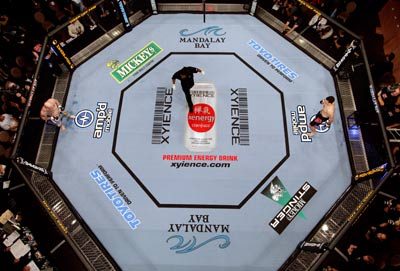
Why the UFC Octagon Isn’t Just a Cage
Forget the boxing ring. That square canvas with ropes doesn’t exist here.
UFC fights happen inside the Octagon.
It’s an eight-sided enclosure. 30 feet across. The walls are fencing, padded at every edge and corner so fighters don’t break their faces on the chain link. It’s tight. Claustrophobic, even.
The floor? Canvas. Custom painted for each specific event. Then tossed. You never see that same mat twice.
Only the referee and the two fighters are allowed inside when the clock is running.
That’s the rule. Strict.
Between rounds, the gates open. Corner men rush in. They’re not just cheering. They’re giving strategic advice, packing cuts, trying to stop the bleeding before the next round starts. It’s a frantic 60-second window in an otherwise isolated space.
Why the cage actually looks like an octagon
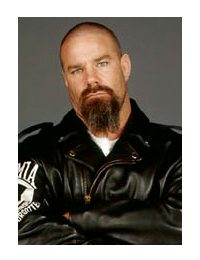
You can’t just roll out of the ring. Competitors are strictly forbidden from leaving the Octagon during a bout. They can’t try to hurl their opponents over the side either. You might chuckle at the idea, but UFC legend Tank Abbott once apparently tried to throw Carl Worsham over the fence. It didn’t work. But the rule exists for a reason.
Why does the UFC use an eight-sided mat anyway? Dana White has explained it. The original concept was about matching styles. Find out who wins. Boxing uses a square. Wrestling uses a circle. The Octagon was designed to neutralize any single martial art’s advantage. The angles are wider than the sharp corners of a boxing ring. Fighters rarely get trapped in a corner with no escape. The fencing keeps them inside. No falling out. No throwing out. It’s a stable structure. Built for safety. And it gives spectators a clear view.
Matchmaking without the rankings
There is no formal ranking system in the UFC. Each weight class has a champion. That’s it. White claims ranking systems hinder good fight cards. They invite corruption. Instead, the promotion relies on Joe Silva, the vice president and matchmaker. Silva uses his own metrics. He analyzes styles and records. His goal is excitement. Not a spreadsheet. When a fighter proves himself, he earns a title shot against the reigning champion. Simple.
The five weight classes
The UFC recognizes five specific weight divisions. Fighters only compete within their class. Though they can move up or down.
- Lightweight : 145 to 155 pounds
- Welterweight : 155 to 170 pounds
- Middleweight : 170 to 185 pounds
- Light Heavyweight : 185 to 205 pounds
- Heavyweight : 205 to 265 pounds
Moving up a class usually means gaining weight. That often costs speed. Moving down means cutting weight. That can mean losing striking power. It’s a trade-off.
Striking, grappling, and ground fighting
Fighting techniques fall into three buckets. Striking. Grappling. Ground fighting.
We start with striking.

The thin glove dilemma and striking rules
Look at those hands. Seriously. Look at the official UFC gloves. They’re 4 to 6 ounces of leather and hope. Compare that to boxing gloves, which sit at 8 to 10 ounces depending on the class. The difference is night and day.
Striking in the Octagon isn’t just punching. It’s kicks, knees, elbows. Fighters pull from everywhere. Boxing footwork. Muay Thai clinch work. But that thin glove? It’s a liability as much as a tool. You miss a punch? You break your hand. Simple physics. That’s why hand-wrapping is an art form. You have to protect yourself while trying to hurt someone else.
And there are lines you can’t cross. You can’t knee a grounded opponent in the head. No downward elbow strikes. No shots to the back of the head. The rules exist to keep people from getting concussed or paralyzed by lazy technique. If you’re on the ground, you’re vulnerable. The ref watches for it.
Takedowns, sprawls, and the art of the slam
Not everyone wants to stand and bang. Some fighters live on the mat. They spend their days drilling grappling and wrestling.
A takedown changes the entire fight. It forces your opponent to the ground. How do you stop it? You sprawl. You throw your weight back, use leverage, stay standing. It’s ugly. It’s effective.
When a takedown lands, it can be spectacular. A slam. A suplex. The crowd goes wild. Or it’s just a trip. Someone loses balance, they hit the canvas. Same result.
Grapplers also hunt for submissions. You might get tapped out from strikes, but more often it’s a hold. A guillotine choke. A rear-naked choke. Some of these work standing up, but ground fighting is where the real danger lies. Once you’re there, it’s chess. Slow, brutal chess.
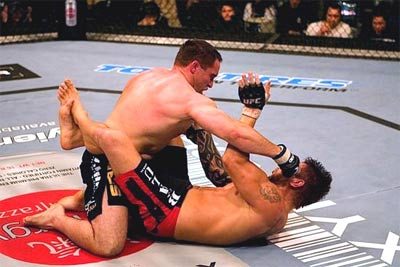
Ground game and positioning basics
Boxing leaves you standing. Kickboxing usually does too. The UFC? Not so much. When a fighter hits the mat, the clock keeps ticking. This is where the chaos gets technical.
You get ground and pound. Strikes from the top. Or submissions from the bottom. The canvas isn’t a rest area; it’s a battleground. Positions matter more here than anywhere else in combat sports. You’ll hear the commentators shout guard, half guard, side control, and full mount. These aren’t just buzzwords. They describe geometry.
Take guard. Fighter A is on their back. Fighter B is on top. Fighter A wraps their legs around Fighter B’s hips. That’s the guard. It’s a defensive cage made of limbs. Fighter B is inside it. Trapped. For now. If Fighter A can control that posture, they survive. If Fighter B breaks it, things get ugly.
To win in the Octagon, you can’t just be good at one thing. You need all three pillars: striking, wrestling, and Brazilian Jiu-Jitsu. Most guys specialize. One guy is a wrestler. Another is a striker. But the best? They have a working knowledge of everything. You can’t ignore the ground game. You can’t ignore the takedown. You have to be dangerous everywhere.
How are UFC winners decided?
So the fight ends. Who takes the belt? Or the paycheck?
It usually comes down to three things.
- Knockout (KO) : One fighter puts the other to sleep. The ref steps in. Fight over.
- Submission : One fighter makes the other tap out. Or passes out from a choke. Ref stops it.
- Decision : The fight goes the distance. Three or five judges score each round. They decide who won based on effective striking, effective grappling, cage control, and aggression.
It’s not just about who looked cooler. It’s about who did more damage. Who controlled the pace. Who survived.
Want to know more about how athletes peak? Check out Sharecare.com for the rest of the story.
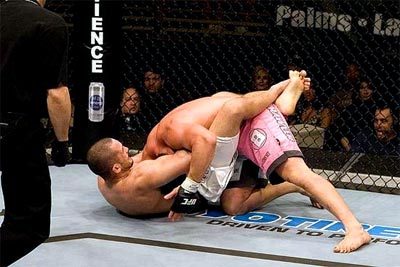
How do you actually win a UFC fight?
Strike. Grapple. Survive. But how does it end?
The cleanest way out is submission. You trap someone in a hold that hurts too much to ignore. An armbar. An ankle lock. They tap. Or they yell “I quit!” Verbal counts just as much as the physical tap.
Sometimes a fighter just can’t breathe. A rear naked choke cuts off the blood or air. Lights out. They didn’t get punched into unconsciousness—they got choked into it.
It’s weird, right? In most sports, quitting feels like failure. In the UFC, it’s smart. It’s honorable. You save your body. You don’t get labeled as someone who threw in the towel out of weakness. You submitted because the pain or lack of oxygen was real.
Then there’s the technical knockout (TKO).
No bell. No final round. Just the ref stepping in.
The ref watches for one thing: can the fighter defend themselves? If the answer is no, the fight is over. It doesn’t matter if they’re standing or on the mat. This isn’t boxing. There is no standing eight count to reset the clock. The chaos is the point.
Refs make split-second calls in messy environments. A fighter swatting at imaginary punches while stumbling? That’s a TKO. A fighter taking unanswered strikes on the ground? That’s a TKO.
You don’t have to be knocked unconscious to lose. You just have to be unable to fight back intelligently.
The referee is the final arbiter of safety, not just scorecards.
So you either make them tap, or you make them stop fighting back. Either way, the walk back to your corner feels the same.
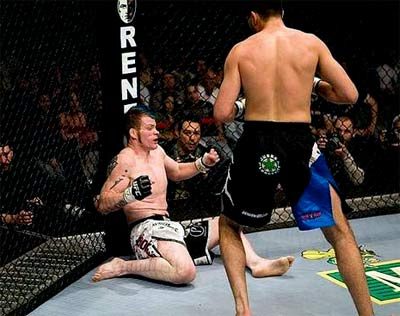
How UFC Judges Actually Score Fights
So the clock runs out. No tapout. No knockout. Just two guys standing there, bruised and breathing heavy. Now it gets messy.
It all comes down to the decision. Three judges sit in the booth with scorecards. They use the 10-point must system. Sounds simple? It’s not. The fighter who won the round gets 10 points. The loser gets nine. Usually.
If a fighter fouls, or sleeps, or just stands in a circle doing nothing, they drop lower. Maybe an 8. Maybe a 7. Penalties hurt. At the end of the night, the scores add up.
If all three judges agree on the winner, it’s a unanimous decision. Clean. If two agree and one disagrees, you get a split decision. That’s where the fan rage begins. And if two judges pick a winner while the third calls it a draw? That’s a majority decision. Confusing, but it happens.
When the Fight Doesn’t End Normally
Sometimes the fight doesn’t go the distance for other reasons.
If your opponent is hurt too badly to continue but hasn’t been knocked out, you can win by technical decision. The ref stops it. The judges look at what happened so far.
Disqualification is another way out. Break a rule? Lose the fight. Instant.
Or the other guy just quits. A forfeit. Maybe he’s sick. Maybe he got hurt in warmups. You walk away with the belt and no sweat.
What Happens When No One Wins?
Yeah, draws exist.
A standard draw means the scores cancel out. Total points are equal. Or close enough that nobody can claim victory.
A technical draw happens when both fighters are too injured to keep going. The ref steps in. Time’s up. Nobody wins.
Then there’s the no contest. This is the weird one. If both guys foul, or if a fighter gets hurt from a dirty hit, the fight is wiped. It never happened. No winner. No loser. Just a blank slate.
Why UFC Judging is a Headache
This is where it gets complicated. Boxing is one thing. Strikes. Footwork. That’s it.
MMA is chaos.
Judges have to weigh everything. Strikes landed. Takedowns. Ground control. Defense.
Here’s the kicker: being on bottom isn’t always losing. If a fighter defends perfectly, or scrambles well, they can win the round from their back. It’s counter-intuitive. It’s also why fans scream at TVs.
UFC President Dana White puts it bluntly:
“There’s a lot of controversy right now over judging. Being a judge is very subjective . . . the main thing you to judge, round by round, is who did the most damage.”
Damage. That’s the key. Not who looked pretty. Who hurt the other guy.
The next section digs into the messy, controversial history of the UFC.
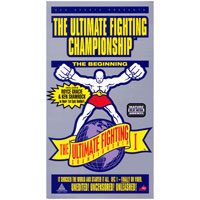
The Original Blueprint for UFC 1
Promotional art for the first UFC event looks tame now. Back then it was radical.
Rorion Gracie didn’t just want to start a sport. He wanted to prove a point. As a Brazilian jiu-jitsu (BJJ) master, he believed his family’s method worked. Not for points. Not for show. For real violence. Arthur Davie, an ad man with a vision for spectacle, saw the marketing potential. Together they built the foundation for what would become a global obsession.
The Gracies had already made a name for themselves. The “Gracie Challenge” was their calling card. Open invitation. Fight anyone. Any style. If you lost, you admitted BJJ was superior. It was arrogant. It was effective.
Davie took this concept to Semaphore Entertainment Group (SEG). The pitch was simple. A tournament. Different martial arts styles go head-to-head. No rules. No weight classes. Just find out which one is the best.
Michael Abramson, an employee at SEG, reportedly coined the name. The Ultimate Fighting Championship. It sounded final. It sounded definitive.
How UFC 1 Actually Worked
On November 12, 1993, the SEG debuted the first event. We call it UFC 1 now, but back then it was just the start.
The format was a bracket. Winner advances. Loser goes home. Davie even had alternates on standby in case someone got knocked out too fast or couldn’t continue. It was chaotic by design.
The fighters represented every corner of the combat world. Karate. Kickboxing. Boxing. Sumo wrestling. Yes, sumo.
Royce Gracie, Rorion’s younger brother, walked into this mix. He wasn’t the biggest. He wasn’t the flashiest. He was smart. He understood leverage. He understood submission.
In the final bout, he faced Gerard Gordeau. Gordeau was a Muay Thai expert. Dangerous. Skilled. But Royce caught him in a rear naked choke. The fight ended. The tournament was over. The message was sent.
Why the Tournament Model Defined Early MMA
The event worked. People watched. They were shocked. They were fascinated. SEG didn’t wait to see if it would catch on. They planned the next one immediately.
They kept the name. They kept the numbering. UFC 2. UFC 3. And so on. This sequential numbering became the standard for years. It gave the sport a lineage. A history you could track.
The early UFC events were all tournaments. It was the only way to settle the “best martial art” debate. You couldn’t just have a fight. You needed a winner who survived everyone else.
Royce’s victory proved something specific. Technique beats power. Ground game beats stand-up. At least in those early days. It changed how people viewed fighting. It changed how they trained.
The Gracie Challenge was closed. The answer was found. Or so they thought.
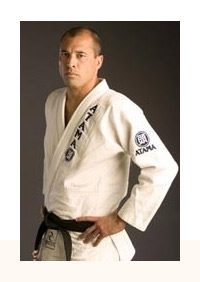
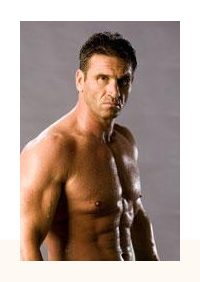
How Royce Gracie and Ken Shamrock Defined Early MMA
Look at the photos of Royce Gracie and Ken Shamrock. They look different now. But back then? They were the blueprint. The early UFC wasn’t the polished product you see on ESPN tonight. It was a chaotic experiment. No weight classes. A lightweight could get tossed into a cage with a sumo wrestler. It was terrifying. And weird. Fighters wore whatever they wanted. A jiu-jitsu competitor would step in wearing a full gi. Kickboxers wore shorts. It looked like a costume party before the violence started.
The organizers didn’t even know how long to make the rounds. Some events had no limit. Just fight until someone quits or passes out. They wanted a clear winner. No judges. No scorecards. Just survival.
Why Ground Game Conquered Early UFC
The “style versus style” hype died fast. Why? Because almost every fight ended on the mat. Most of these martial artists had zero training for ground combat. Royce Gracie won three of the first four tournaments. He didn’t do it with flashy kicks. He did it by dragging opponents to the floor and making them tap. It proved a hard truth: you need a ground game. Or you lose.
Fighters had to adapt. Fast. They started mixing wrestling with submissions. The era of the single-discipline black belt was over. The UFC quickly realized a black belt didn’t mean you could fight. It just meant you could do kata.
No Rules, No Referees, No Mercy
Regulation? Forget it. The UFC held events in states without athletic commissions. They hid from the law. There were no judges. Referees couldn’t stop the fight. Their only job was to watch for submissions and enforce the few rules that existed. It was brutal. And it worked, for a moment. But the UFC gave refs the power to stop fights after the first few events. Sanity eventually won out.
Tournament format ruled the early days. Except for UFC 9. Fighters had to wrestle, kick, and submit multiple opponents in one night. By UFC 18, that ended. Single matches became the norm. Fighters could breathe.
Dana White has said it himself. The whole thing was an accident. “Never in a million years did these guys think they were creating a sport.” It was supposed to be a one-off. Pay-per-view bought it. So they did another. And another.
John McCain vs The UFC
SEG, the promoters, leaned into the controversy. They sold the UFC as brutal. “No holds barred.” They wanted you to think it was human cockfighting. Senator John McCain agreed. He hated it. He urged governors to ban the events. Arenas dropped the UFC at the last minute. Cable companies refused to carry the PPVs.
SEG resisted partnering with athletic commissions. They wanted to keep the “primal” image. It backfired. By the time they adopted the New Jersey Athletic Control Board rules, they were broke. From UFC 23 to UFC 29, SEG faced bankruptcy. They couldn’t even afford to release the events on home video.
Zuffa Buys the UFC
In 2000, SEG promoted UFC 29. It was their last stand. Bankruptcy loomed. Political pressure crushed their ability to book shows. Enter Frank Fertitta III and Lorenzo Fertitta. They formed Zuffa, LLC. “Zuffa” means fight in Italian. Fitting. They bought the UFC. Dana White became president.
Lorenzo had served on the Nevada State Athletic Commission. Suddenly, the UFC had oversight. It had credibility. Cable companies came back. The sport was saved. Not by brutality. But by structure.
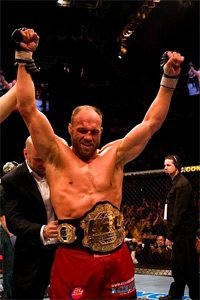
How Spike TV and Reality TV Changed the UFC Game
The landscape shifted in 2005. Spike TV rolled out the first season of The Ultimate Fighter. It wasn’t just another sports broadcast. It was a reality show.
Viewers watched hopefuls fight for a UFC contract. They split into camps. Trained together. Fought each other weekly. The loser went home. The winner stayed.
This was the moment the UFC broke its pay-per-view stranglehold. For the first time, people could catch a fight on basic cable. No credit card swipe required.
It educated the audience. It stripped away the mystery. It showed the grind behind the glory.
“The Ultimate Fighter” was scheduled for at least two more seasons back then.
It proved that fighters weren’t just barbarians. They were athletes with stories. Dana White’s point from 2001 finally had a stage to breathe.

The Pride Era and the Dream Match Mythos
Back in March 2007, the Fertitta brothers pulled off a move that sent shockwaves through the combat sports world. They bought Pride Fighting Championship. That Japanese giant was the UFC’s main rival for years. Fans had spent decades dreaming about what those matchups would look like. The heavy hitters from Pride versus the UFC’s elite. Dana White said it could finally happen. Plans were early, sure, but the possibility of settling who was truly the best in each weight class was real.
Expanding the Cage Globally
The UFC was built in Nevada. But White didn’t want to stay there. He pushed hard to take fights to other states and overseas. The broadcast already reached 170 countries. The goal was simple: put bodies in seats. Live events build a grassroots fanbase. You can’t replicate that energy through a screen.
“When you take the live event somewhere and you get 15,000 or 20,000 people to show up to the event and those people leave the event and go to work the next day, they talk to their relatives. They talk to their friends. It starts to spread…that whole word of mouth thing happens, and it’s imperative for the growth of the business and to take it global.”
Events were already lined up for Europe, Japan, Canada, and Mexico. It was about creating local buzz that translated into global revenue.
How to Watch and What You’re Missing
For fans trying to keep up, the options were limited but growing. You had pay-per-view events roughly once a month. Then there was The Ultimate Fighter on Spike TV. Special Fight Night cards also aired on the network. DVDs were an option. Live events, if you could get there.
There was a glaring hole in the archive though. UFC events 23 through 29 remained unavailable for commercial release. A weird gap in the history. If you wanted to see those fights, you were out of luck.
Common UFC Questions Answered
New fans often have the same questions. Here are the direct answers.
How much does it cost to go to a UFC fight?
The average ticket runs about $208. You can sometimes find cheaper seats, starting around $64, depending on where the event is and who is fighting.
Who is the richest UFC fighter?
Conor McGregor holds that title. His estimated net worth sits at $120 million. He changed the economics of the sport.
Where can I watch UFC events live?
Most main events are pay-per-view. You can stream them on the UFC website or via ESPN+. It’s a subscription model now.
What exactly is MMA?
Mixed Martial Arts. It’s not just one style. It blends techniques from boxing, wrestling, judo, jiu-jitsu, karate, Muay Thai, and more. It’s a hybrid combat sport.
Why is MMA illegal?
It isn’t. That’s an old myth. MMA is one of the fastest-growing sports in the U.S. The UFC helped normalize it. States like New York lifted their bans as recently as 2016. The stigma faded as the sport professionalized.
Further Reading and Sources
If you want to dig deeper into the mechanics of combat sports or the history of the UFC, there are plenty of resources available.
Related topics include how boxing works, the principles of karate, and the business of pro wrestling. Understanding muscle mechanics and performance-enhancing drugs also provides context for athlete performance.
Key resources for staying informed include the Ultimate Fighting Championship official site, the Nevada State Athletic Commission, Sherdog, and MMAFighting.com.
Historical context comes from sources like Dennis Cauchon’s 2006 USA Today piece on amateur fighting crowds. Clyde Gentry’s No Holds Barred offers insight into the martial arts revolution. Cliff Montgomery’s This History of the UFC and Dana White’s 2007 interview provide primary accounts of the organization’s early days.