Let’s be honest. When you hear “esoteric,” your mind probably jumps to tarot cards scattered across a wooden table. You imagine incense smoke and a secret language only a few initiates understand. It feels distant. Esoteric spirituality often seems reserved for the deeply devoted or the strictly mystical.
Yet, this perception is shifting. A growing number of people are exploring these practices, even those who swear they are “not into spirituality at all.” We dug into this trend not to convince you to believe in magic, but to examine how modern spiritual practices can be grounded, soothing, and genuinely useful. The result was surprising.
What is esotericism really about?
The first thing to realize is that esotericism isn’t a monolith. It is far more complex than the stereotypical image suggests. At its core, it is an intention. It is about paying attention to what you feel. It is about observing your own cycles and ritualizing moments to give them meaning.
There is no “magic” in the spectacular sense of the word. Instead, it is an art of presence.
Consider these common actions:
* Blowing out candles while making a wish.
* Wearing a pendant that offers reassurance.
* Lighting a candle to mark a fresh start.
* Writing down an intention in a journal before a major life step.
Many of us already perform these gestures without naming them. The practical version of esotericism is simply this: transforming daily life into a space for listening and alignment. It uses tools to clarify, soothe, and help you decide.
It does not explain the universe. It helps you listen to yourself.
This gentle framework can act as a lever for well-being. We found that taking five minutes for a single card, a breathing exercise, or a scent of incense can deflate a saturated day. If you are wondering where to start, the current ecosystem is vast. There are educational books, knowledgeable creators, and podcasts. For a concrete starting point, look to established resources like Dans les Yeux de Gaïa.
This French online esoteric shop has been around for over a decade. It is known for a catalog of more than 2,000 tarot and oracle decks. It also stocks natural stones, incense, and radiesthesia tools. The store serves everyone from beginners in cartomancy to experienced practitioners. It is recognized for its rigorous selection, clear product sheets, and expert advice. It positions itself as a French reference for spiritual guidance, lithotherapy, and energetic rituals.
Navigating the tools without getting lost
The landscape includes several distinct categories. Understanding how to use them prevents feeling overwhelmed.
Oracle and Tarot: The Art of Asking
When people hear “cards,” they think of divination. In practice, most users treat them as a mirror. You draw a card to illuminate a mood, question a choice, or put words to a feeling of uncertainty.
For beginners, choose a tarot deck for its visual clarity and accessible explanations. An oracle deck for inner guidance often wins people over with simple words and evocative images.
The goal isn’t to “believe” in the cards. The goal is to find a language that helps you think. A reading is time for yourself. It forces you to slow down. You formulate an honest question. You listen to what the image triggers.
This is where expert resources matter. Good booklets, pedagogical authors, and coherent selections from reliable suppliers change the experience. It shifts the activity from superstition to reflection.
Natural Stones and Lithotherapy: The Language of Sensation
The spirituality of natural stones sparks debate. That is normal. You might be drawn to them for aesthetics, symbolism, or pure curiosity.
The benefits of lithotherapy are often experienced intimately. You might keep a stone in your pocket before an appointment. You might place a pebble on your desk to remind yourself to breathe. A geode might calm the eye and the atmosphere of a room.
You aren’t looking for miracles. You are looking for a relationship. The texture, temperature, and color become sensory anchors that bring you back to the present moment.
When starting out, follow your attraction rather than a rigid theory. Read a few lines about correspondences, then experiment. Quality matters. Transparency about the origin of the mineral is key. A reliable online esoteric shop acts as a safeguard here. Look for clear sheets, faithful photos, and human advice.
Feedback on stores like Dans les Yeux de Gaïa highlights this value. They offer a demanding selection. Their teams steer customers toward utility rather than collectionism.
Incense, Smudging, and Purification Rituals: Restoring Calm
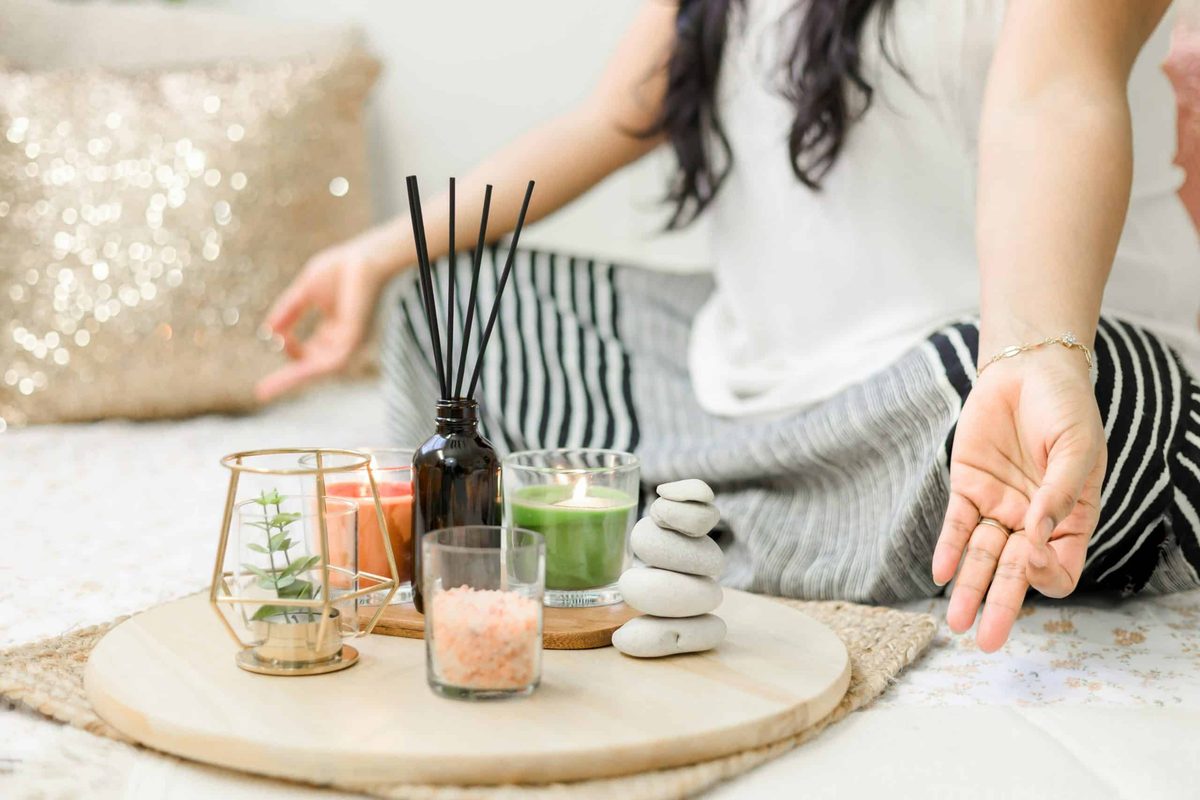
Purification rituals are not grand displays. They often take just one minute. You might ventilate a room, light a discreet incense stick, and set an intention like opening an internal window.
You don’t expect the smoke to solve your problems. You use the scent as a signal. It marks the shift: here and now. You change the energy. You close the day. You prepare for sleep.
The priority is to enjoy the smell. Choosing high-quality, natural incense limits headaches. It makes the experience truly soothing.
We tested this in the late afternoon before tackling a task. The sensation of a reset was real. It wasn’t magic. It was simply giving yourself permission to breathe consciously.
The line between the mystical and the mundane is thinner than it appears. You don’t need to abandon logic to find peace in these small, deliberate acts. You just need to pay attention.
Using a pendulum to manage doubt
The pendulum is compelling because it makes hesitation visible. Instead of treating it as an infallible oracle, you can treat it as a tool for slowing down. You pause. You frame a clear yes-or-no question. You watch. The physical act forces you to clarify what is actually at stake. Often, the answer was already there, drowned out by noise. Starting with a pendulum is mostly about learning not to worship it. You use it as a pretext to better define your parameters, limits, and criteria. The interest isn’t in the “prediction,” but in the quality of the inner dialogue it triggers.
Wearing your intentions
A bracelet, a ring, a necklace: many of us already carry symbols. Energy jewelry simply asks us to acknowledge that dimension. You choose a material, a stone, an engraved word, and assign it a function: to remind you to be gentle with yourself, to speak slowly, to hold your course. The object doesn’t act. The promise you make to yourself every time you touch it does. Here again, the value is less mystical than psychological: you anchor a benevolent reminder in something tangible.
What surprised us
Two surprises stand out after this immersion. The first is simplicity. We expected a complicated universe, full of codes and obligations. Instead, we found flexible, adaptable practices that fit in a pocket or a corner of the living room. The second is the framing effect: these tools work mainly because they create bubbles of attention. A card in the morning, incense at dusk, a stone in your palm before speaking; we establish micro-rituals that help transition from one state to another. It is unimpressive, but very concrete.
Why curation matters
We also noted the importance of the ecosystem. When you start out, you need a clear tone, landmarks, carefully chosen objects. That is where curation matters: a vast catalog without a compass loses the reader. Conversely, a space that selects, explains, and reassures helps. Dans les Yeux de Gaïa checks these boxes based on our readings and feedback: a reliable online esoteric shop, well-rated, that speaks to both beginners and the curious, and claims an accessible and benevolent approach. We understand why this name comes up so often when you look for an oracle for inner guidance, a tarot for beginners, subtle incenses, or minerals whose sheets do not exaggerate promises.
At the heart of it, modern esotericism is perhaps just a toolbox to gently remind us that we can slow down, breathe, and talk to ourselves differently. Not a parallel world, but a lexicon of objects and gestures to better inhabit our own. If we had to give advice, it would be to start small, with what calls to you: an image, a scent, a stone. Let yourself be surprised, test it, keep what does you good. Contemporary spirituality doesn’t require faith. It offers paths for self-care, one gesture at a time.