There has never been anyone like him. Not before, not since. Sure, baseball has seen athletes with imposing physical gifts. We’ve seen performers who command the arena. You can buy a ticket to a weekend game and see a new superstar emerge. But Babe Ruth? He was a different species entirely.
He didn’t just play the game. He broke it.
Ruth invented the home run as a primary offensive weapon. Some critics argue that the shift in baseball’s offensive philosophy was inevitable—that if Ruth hadn’t done it, someone else would have. Maybe. But that misses the point. It wasn’t just about the stats or the swing. It was about the package. A boyish, fun-loving package that made you laugh, cheer, and forget where you were sitting.
The Roaring Twenties Need
He arrived in New York City right as the Roaring Twenties kicked into high gear. The city was loud. It was busy. It was the noisiest town on the continent. And Ruth made it roar louder. No other city could have contained him. No other time could have satisfied his exorbitant, exuberant tastes.
He was immense on the field. He was outrageous off it. And somehow, he was lovable in every single iteration.
His face was unmistakable. His form was unique. Who else looked like Babe Ruth? Not his father. Not anyone else. He was instantly recognizable. He felt like everyone’s favorite, fun-loving uncle. He wasn’t just a player. He was a presence.
On a baseball field he was, for almost twenty years, the center of attention no matter what he was doing: from the time he first stepped out of the dugout for batting or fielding practice, hours before a game was scheduled to begin, until the last out in the ninth inning, most of the audience seemed mesmerized by his presence.
Biographer Lawrence Ritter captured it perfectly. Fans in the box seats. Fans in the bleachers. Home or away. They watched him. Always him.
From Baltimore to the Bigs
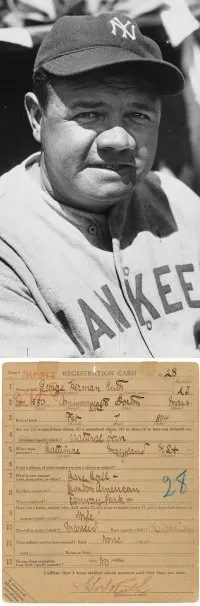
If you want to understand the man, you have to start with the humble beginnings. We’re talking about George Herman Ruth Jr., born in Baltimore. His early years were rough. His parents struggled. But destiny had other plans.
St. Mary’s Industrial School for Boys changed the trajectory. George Jr. ended up there after his mother passed away. It was time with the Xaverian Brothers that shaped the man he would become. That’s where he discovered baseball. He learned the game from a mentor who saw potential in the big kid.
Then came the signing. 1914. Baltimore Orioles. His major league career officially began. But it wasn’t smooth sailing. He started in the minors. He struggled. He earned his nickname—“The Babe”—not because he was great yet, but because he was a kid playing in the big leagues.
His first spring training was a lesson in baseball history. Early 20th-century camps were gritty. Ruth’s first pitching outings showed flashes of brilliance but also instability. When the 1915 regular season started, he ended up elsewhere.
Boston Red Sox and the Pitcher-Hitter Hybrid
He joined the Boston Red Sox. He didn’t love the town at first. The team was his new home, but the culture shock was real. Unlike his later transition to the Yankees, this move was rough.
But then came the power. It took time to prove himself as a power hitter. He was also a major league-worthy pitcher. In 1915, he was successful. In 1916, he was on top of his game. Both the Babe and the Red Sox ended the season at the peak. The stats back it up.
The 1917 season brought big changes. Personnel switches. Pressure. As his fame grew, so did the weight on his shoulders. He felt it. He struggled with it.
Then, 1918. The Red Sox made a decision. They moved Babe off the pitcher’s mound. Into the daily lineup. A starting batter. It was an experiment. A risky one. But it worked.
The Wild Days and the Sale
The 1919 season was messy. The Red Sox weren’t in the pennant race. But fans stayed. Why? Because of the Babe’s performance. Even when the team failed, the individual brilliance held attention.
But off the field? It was wild. Bored with farm life. Ruth spent more time out on the town. Hobnobbing. Erratic driving. It displeased his superiors. They couldn’t control him.
And then came the sale. Harry Frazee, the Red Sox owner, was desperate for money. He sold Ruth to the New York Yankees. It was a deal that earned him the ire of Boston forever. A historic sale. A controversial sale.
The Yankee Era Begins
Unlike Boston, the Yankees felt right. Ruth felt at home immediately. He encountered his teammates with a sense of belonging he hadn’t found before. But the transition wasn’t just emotional. It was mechanical.
What’s myth? What’s accurate about the Babe’s famous batting mechanics? The power swing. The stance. The follow-through. It was a thing of beauty and terror.
New York loved him. And he made news. Not just for baseball. For his escapades. His hobnobbing. His erratic lifestyle. He was the newest Yankee. And he was ready to change the game again.
Finances and Injuries
Money seemed to slip through his fingers. No matter how much he earned. Then he met Christy Walsh. The agent. The man who got the finances in order. The reckless Babe finally found some structure.
But the body couldn’t handle the pace forever. After a stellar 1921 season, injuries threatened his play. The World Series. Recovery. The toll it took.
This is just the beginning. The story of how a boy from Baltimore became the myth. How he shifted the center of gravity in sports. How he made New York roar. The rest of the tale is written in stats, in scars, and in the echoes of a bat cracking against a ball in the darkness.
The relationship between the Sultan of Swat and baseball’s governing body was never just about talent. It was about control, money, and who held the reins.
Ruth loved the off-season. He loved the barnstorming tours, the independent exhibition circuits, and the heavy bags of cash they brought in. This wasn’t just fun; it was a financial lifeline that often eclipsed his major league salary. But Commissioner Kenesaw Mountain Landis saw it differently. To Landis, Ruth’s side gigs threatened the integrity of the sport. The commissioner wanted players on lock. Ruth wanted freedom and fortune.
This friction defined much of Ruth’s career. It wasn’t a clean break. It was a tug-of-war that played out in press clippings, suspensions, and public relations nightmares.
The 1922 Crash and the Rise of the “Impossible” Pitch
1922 was a disaster. Ruth, who usually had fans eating out of his hand, found himself in hot water. He was suspended multiple times. The media turned. And then there was the pitching.
The game was evolving. Pitchers were developing new deliveries that made the ball seem to drop or fade in ways batters hadn’t seen before. The curveball got sharper. The spitball, though technically illegal, was still in play. Ruth’s numbers dipped. He looked mortal.
But Ruth wasn’t one to stay down. He met figures during this turbulent period who would reshape his life—mentors and fixers who understood the business side of his fame. They taught him how to navigate the minefield of Landis’s office.
The Yankee Dynasty Begins: 1923 and 1924
By 1923, the formula clicked. Ruth joined the New York Yankees, and the offensive output was terrifying. He entered his prime. The stats weren’t just good; they were historic.
1924 followed. Ruth was unstoppable. He wasn’t just hitting home runs; he was driving in runs, drawing walks, and dominating the pitcher’s mound with his presence alone. The Yankees were becoming a machine, and Ruth was the engine.
The 1925 Stomach Crisis
Then came 1925. The streak broke. Not because of age, but because of pain. Ruth was struck by a series of severe stomach ailments that landed him in the hospital. He missed games. The media whispered that the end had come. Rumors swirled that the Babe was finished.
He proved them wrong.
The 1926 Comeback
Ruth returned in 1926 with a vengeance. His stats didn’t just recover; they soared. He silenced the critics who said he’d never be the same. The comeback wasn’t just a personal victory; it was a statement to the league. You couldn’t break him.
The Five O’Clock Lightning of 1927
1927 was the peak. The Yankees became known as the “Five O’Clock Lightning.” Why? Because the offense exploded in the afternoon, overwhelming opponents before they could adjust. Ruth’s numbers that year remain the gold standard for power hitting. He wasn’t just playing baseball; he was rewriting the rules of what was physically possible on a diamond.
The Ruth-Gehrig Dynamic
Off the field, Ruth’s relationship with Lou Gehrig evolved. Initially friendly, the two giants of the Yankees developed a complex bond. On the field, they were composed, professional. But behind the scenes, tensions simmered. Gehrig’s steady reliability contrasted with Ruth’s chaotic brilliance. The friendship masked underlying frictions that would later surface, though the public never saw the cracks.
The Tumultuous 1928 Season
1928 was a battle. Injuries plagued Ruth. The Yankees faced stiff competition. Yet, they fought through the pain. They won the World Series. It wasn’t pretty. It was gritty. Ruth’s leadership, even when he wasn’t at 100%, kept the team focused.
1929: Death and 500
1929 brought tragedy. Ruth’s wife, Helen, died. The shock was profound. But on the field, Ruth kept swinging. He hit his 500th home run. It was a milestone, but it felt hollow against the backdrop of personal loss. The year was a mix of sorrow and record-breaking achievement.
The Managerial Ambition
When Miller Huggins, the Yankees’ long-time manager, died in September 1929, Ruth believed he was the natural successor. He thought he knew the game. He knew the players. He expected Landis and the team ownership to hand him the keys.
They didn’t. The appointment went to someone else. The rejection stung. Ruth’s desire for control over the game, not just his role in it, had been firmly checked.
The Legend Continues
Despite the managerial snub, Ruth’s legend grew. His most dramatic moments continued to captivate fans. But the landscape was changing. The Great Depression was looming. The economic climate was shifting from the lavish excess of the Roaring Twenties to a time of scarcity.
Hard Times and the 1934 Reality
The Depression hit hard. Baseball salaries were cut. The glamour faded. Ruth’s skills were past their prime. He struggled to find a place in the American League that offered the respect or compensation he felt he deserved. His managerial dreams remained elusive.
The 700th Home Run
But wait. All was not lost. Ruth kept swinging. He hit his 700th home run. A milestone far beyond any other player in Major League history. It was a testament to longevity and power that still stands as a testament to his unique talent.
International Barnstorming: Japan
Struggling with his status in the AL, Ruth looked abroad. He took a summer tour to Japan. It was a mix of exhibition games and cultural exploration. The reception was electric. The Babe was a global icon. For a while, the international stage offered the freedom he cr