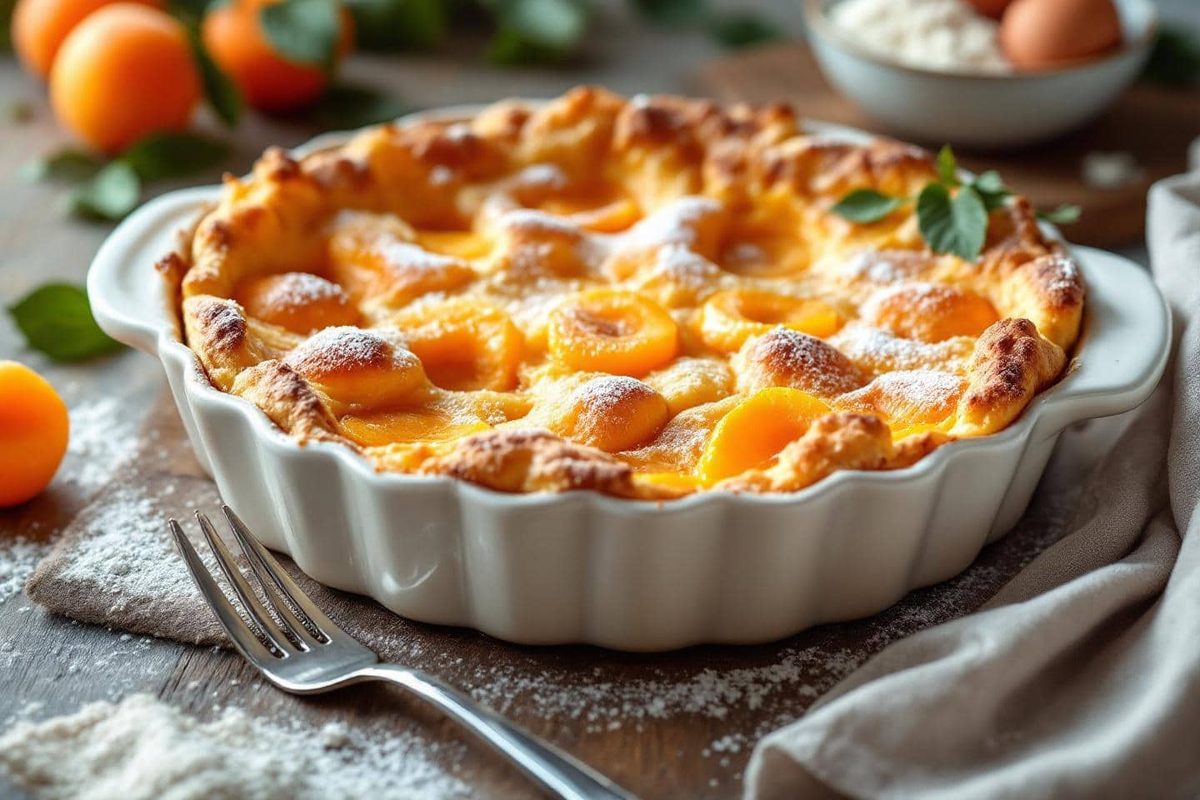
The sun is hanging on in August, spilling light onto the last juicy fruits at the market. There is a specific comfort in making a clafoutis now. It is golden, tender, and studded with fragrant apricots. It feels like a celebration of the lingering warm days. You want something that bridges the gap between lazy afternoon naps and dinner on the terrace.
This classic French dessert is often associated with cherries. But apricots are just as right for the job. Their sweet and sour flavor hits different. It tastes like vacation. Like picnics. Like simple pleasures.
Here is how to make one that tastes like childhood. It is a gentle transition back to reality.
The Ingredients You Need
Start with the fruit. You need 700 g of ripe apricots. They should be fragrant. If they smell good, they will taste good.
Then gather the dry goods. 100 g of powdered sugar works best for smoothness. 60 g of flour provides structure. A sachet of vanilla sugar adds depth.
The wet ingredients bind it all. 4 medium eggs. 25 cl of whole milk. 40 g of melted butter, plus a little extra for greasing the pan.
For the final touch, you need the zest of half a non-treated lemon. And a pinch of salt to wake up the flavors.
How to Prepare the Apricot Clafoutis
Preheat your oven to 180°C (350°F). This temperature ensures the clafoutis puffs up without burning the edges too quickly.
Butter a baking dish. A round one works well. Sprinkle a little sugar in the bottom if you want a caramelized crust.
Prepare the apricots. Wash them. Halve them. Remove the pits. You can leave them whole if you are brave, but halves cook more evenly. Arrange them in the prepared dish. Place them cut-side up or down. It does not matter much. What matters is that they are packed in tight.
Now, the batter. Whisk the 4 eggs and the 100 g of sugar together. Do not rush this. Whisk until it is pale and slightly frothy. This incorporates air.
Add the vanilla sugar. Mix.
Sift in the 60 g of flour. Whisk gently. You want no lumps. But do not overwork it.
Pour in the 25 cl of milk. Stir until combined.
Add the melted butter. Whisk again.
Fold in the lemon zest and the pinch of salt. The zest adds brightness. The salt balances the sweetness.
Pour the batter over the apricots. It should cover them partially. They will peek out from the top.
Bake for 40 to 45 minutes. The clafoutis is done when the top is golden brown and puffed. The center should still have a slight jiggle. It will set as it cools.
Let it cool for a few minutes. Dust with powdered sugar if you like. Serve warm or at room temperature.
Why This Works
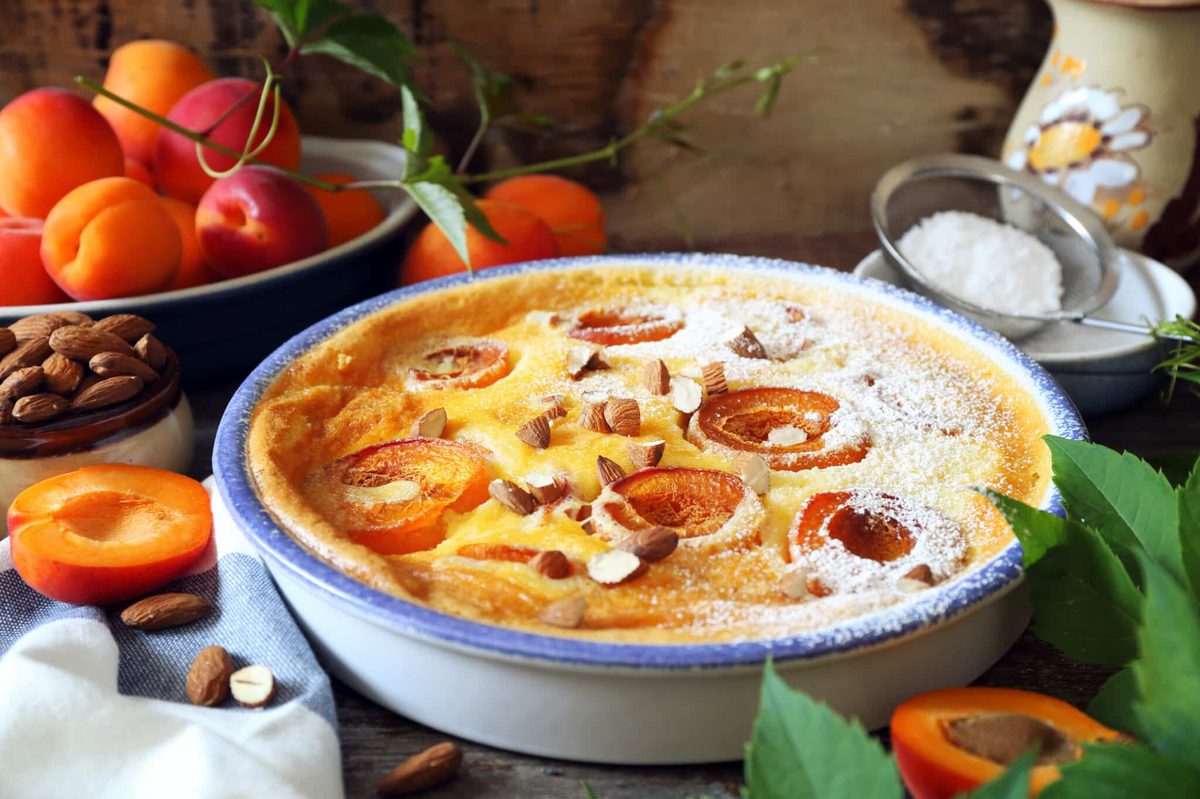
Start with the apricots. Wash them, slice them in half, and carefully remove the pits without tearing the flesh. To bring out a smoother texture and deeper flavor, toss the halves in half the sugar along with lemon zest before cooking. This simple step lets the fruit’s natural juices work their magic, ensuring a melt-in-your-mouth result.
In a large bowl, whisk two whole eggs and two yolks, setting the whites aside. Add the remaining sugar and vanilla sugar, mixing well. Fold in sifted flour, a pinch of salt, milk, and melted butter. Beat until the batter is perfectly smooth. No lumps allowed.
Whip the reserved egg whites into firm peaks. Gently fold them into the batter. This technique introduces air, giving the clafoutis an irresistible lightness while keeping the center rich and creamy.
Generously butter a large gratin dish or pie plate. Arrange the apricots cut-side up. Pour the batter over them carefully. The fruit should remain visible, not completely submerged in the mixture.
Bake at 180°C (traditional heat) for 35 to 40 minutes. You want a golden crust, slightly caramelized around the edges. Let it cool slightly before dusting with powdered sugar, if you like. The surface still shimmers with heat, making it nearly impossible to resist taking a bite.
Secrets for a tender apricot clafoutis
The quality and ripeness of the apricots make all the difference. Choose fruit that is fully mature and sun-kissed. Their pronounced acidity balances the sweetness of the batter, creating a more complex flavor profile.
For an extra layer of aroma, sauté the apricots briefly in a pan with a knob of butter and a spoonful of sugar. This caramelizes their natural sugars and enhances their perfume. Pair this with lemon zest for a bright, fresh note.
For an even smoother batter, replace part of the milk with heavy cream. You can also sprinkle sliced almonds on top before baking. The contrast between the soft batter and crunchy almonds adds a satisfying textural element to every bite.
Serving suggestions and elegant presentation
Serve the clafoutis slightly warm or chilled after refrigerating. It works for any meal of the day. Pair it with a scoop of vanilla ice cream, a cloud of whipped cream, or crushed pistachios for added crunch.
For a bistro-style presentation, make individual portions in ramekins. They look as good as they taste. For a festive twist, flambé the apricots with a splash of spirit just before baking. This respects the original recipe while adding a celebratory flair.
Plate it carefully on a white dish. Garnish with fresh apricot wedges or grated lemon zest for a seductive summer touch.
Storing leftovers and creative recycling ideas
The apricot clafoutis stays tender for up to two days when covered with plastic wrap in the refrigerator. Reheat it gently in a low oven or serve at room temperature to restore its melt-in-your-mouth texture.
If you have leftovers, enjoy them for breakfast with a dollop of plain yogurt. Cube them into a fresh fruit salad to wake up your palate. Crumble them over dessert cream for a delicious end to a summer evening or vacation meal.
This recipe encourages transformation. Let yourself be surprised by this generous dessert, perfect for closing a dinner or celebrating the end of summer. With its light batter, juicy apricots, and sunny vibe, it extends the warmth of the season into every bite. Each piece carries the simple taste of shared happiness, a lingering memory that lasts beyond the months.