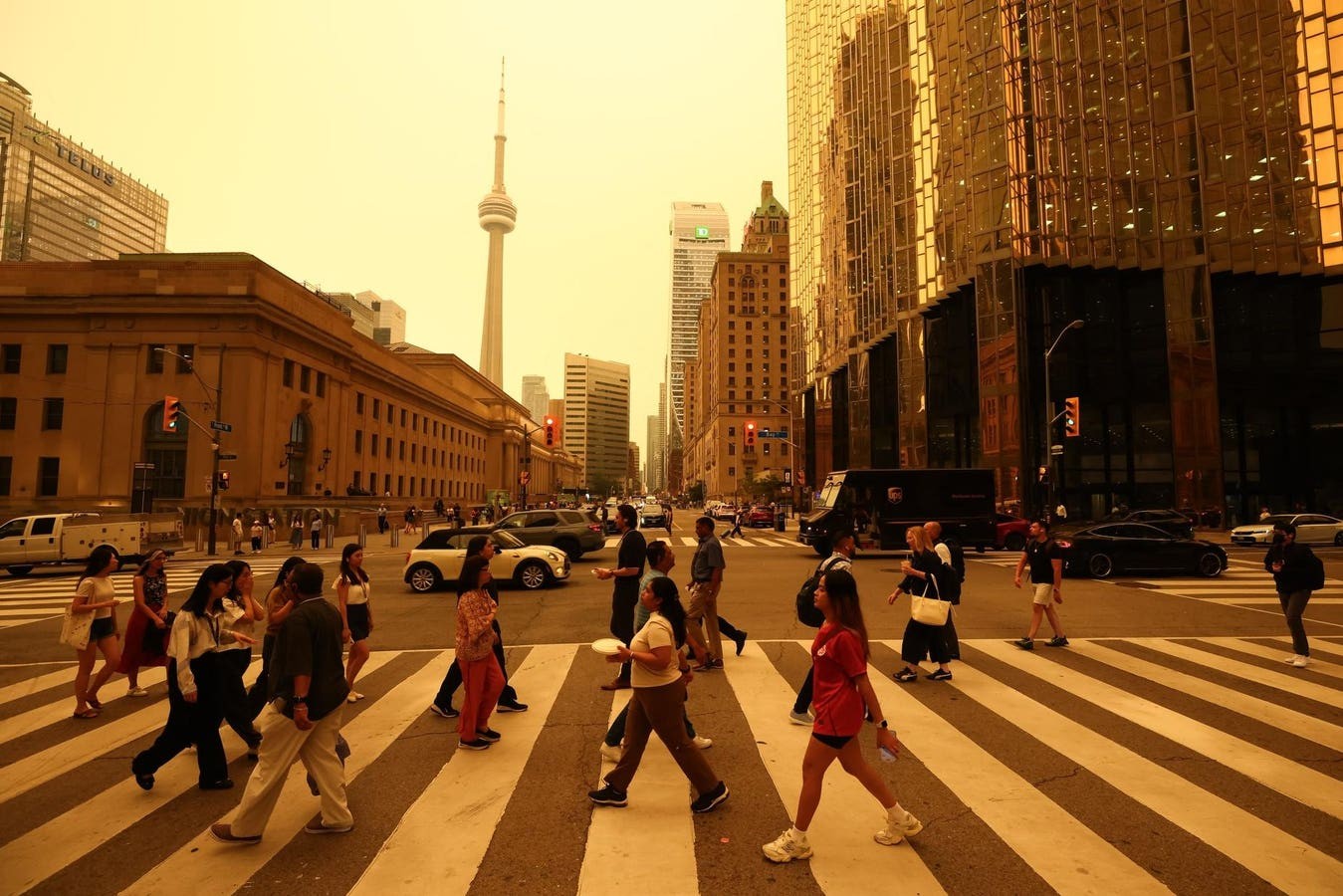
The sky turns the color of ash. You look outside, expect a Tuesday morning, and get a warning. Thick smoke from wildfires fed by climate change is choking large swaths of Canada and the United States. Health officials keep repeating the same thing, yet people forget it. Do not underestimate the danger just because the fire is hundreds of miles away.
The Numbers Are Scary
Detroit hit 518 on the air quality index Wednesday at 8 am. For context, over 300 is hazardous. This city was the most polluted major urban center on the planet. Toronto and Minneapolis were not far behind. Chicago? Unhealthy. These places round out the worst offenders.
Smoke is not just visible grayness. It is a mix of gases and microscopic debris from burning trees, buildings, everything. The real enemy is PM2.5. These fine particles are tiny enough to burrow deep into your lungs. They enter the bloodstream. From there, the damage spreads.
Think asthma. Think chronic obstructive pulmonary disease. Think heart attacks and strokes. Burning eyes, sore throats, headaches—these are the immediate complaints. Long-term? The risk of cancer goes up. With fire seasons getting longer and hotter, this hazard is here to stay. What can you actually do about it?
Know Before You Go
Check the forecast. Not the weather. The air quality.
Knowing how much particulate matter is floating around tells you if exercise is a good idea. Probably not. When the numbers climb into the red, experts say stay home. If you must be out, do not jog. Running just pulls more poison into your chest.
Keep windows shut. Run the AC on recirculation. Grab a HEPA filter.
Your house is only safe if the air inside is clean. Furnace filters help too if they are high efficiency. If the air inside tastes like smoke, you are losing the battle.
The Mask Myth
Cloth masks did their job for a viral pandemic. They do nothing for wildfire smoke. The particles are too small. Surgical masks? Same issue.
You need an N95, KN95, or equivalent respirator certified by NIOSH. These filter 95 percent of airborne particles. But only if they fit.
Gaps are the enemy. A gap by your nose, a gap near the cheeks, or even a bit of facial hair lets the smoke in. One size does not fit all. Try different brands. Some people find them impossible to breathe through. Kids? They usually can’t seal the mask properly. People with severe heart or lung conditions might struggle.
Still, experts warn: the mask is not a pass to stay outside. It is a shield for the trip to the pharmacy. Reducing time outdoors remains the gold standard.
The best protection is staying indoors. Improving indoor air. Watching the alerts.
Respirators and purifiers might soon feel like essential summer gear across the U.S. and Canada. Just like sunscreen. Just like an umbrella, except this rain burns.
The smoke will lift, eventually. Then the season ends. And we wait.