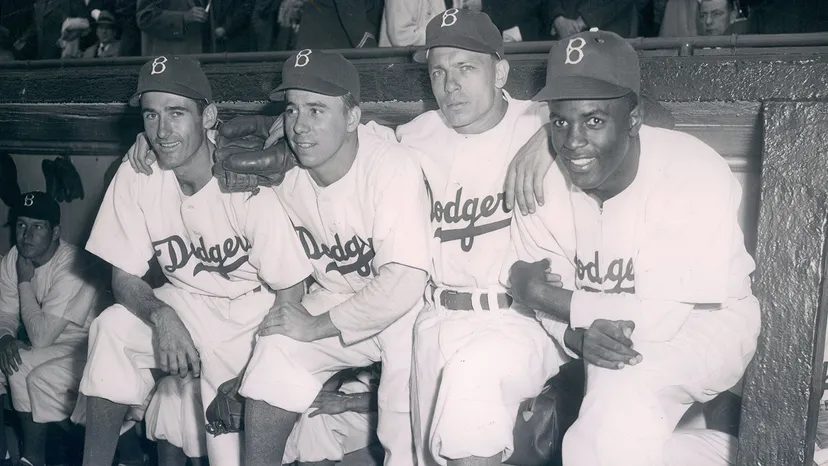
Jackie Robinson is the name everyone knows. If you watched the film 42, you know the script. He broke the color barrier in 1947 for the Brooklyn Dodgers. It’s treated as gospel. A singular, heroic moment where one man dismantled segregation in professional sports and helped shift the tides of the American civil rights struggle. The story is powerful. It’s inspiring. It’s also incomplete.
We often skip over the players who were already on the field long before Robinson stepped onto Ebbets Field. They were there. They played. They competed. They just weren’t given the credit in the mainstream narrative.
April 15, 1947. That’s the date etched in history. Robinson started at first base. He would later become the face of second base, but that debut day, he took the dirt at first. The crowd roared. The barrier, as they say, shattered. But here’s the thing: there was no written rule banning Black players. Not officially. Since 1889, however, major league owners had operated under a silent, unwritten agreement. A gentleman’s agreement to keep African Americans out of the big leagues. It was an open secret. A blockade built on consensus rather than code.
Robinson wasn’t just a ballplayer. He was a force. A four-sport star at UCLA. He dominated in the Negro Leagues before signing with Brooklyn. His athleticism was undeniable. It demanded attention. But he was also a disruptor. A man who refused to sit down for segregation.
In 1944, while stationed as a second lieutenant at Fort Hood in Texas, Robinson was ordered to move to the back of an Army bus. He said no. The result? A court-martial. Charges of insubordination. He was acquitted. Honorable discharge followed. This wasn’t just about baseball. This was about a man who would not move.
Think about that context. Before 1947, non-white players had already been playing on baseball’s biggest stage. Who were they? Why are they forgotten? The history is messy. It’s layered. And it starts well before 1947.
The Architect Behind the Breakthrough
Branch Rickey didn’t just hire Jackie Robinson; he engineered his entry into the National League. The Dodgers president, a man who had already built a winning machine with the St. Louis Cardinals and invented the modern minor league farm system, saw a path that no one else wanted to walk. But Rickey and Robinson weren’t acting in a vacuum. The push to desegregate baseball started long before 1947.
Activists, union leaders, and journalists for Black newspapers had been screaming for change for years. Their fight against the color line mirrored the broader struggle for civil rights in housing, jobs, and the military. Throughout the 1930s and 40s, protesters picketed Yankee Stadium, Ebbets Field, and Wrigley Field. They demanded baseball tear down its walls. These demonstrations didn’t just make noise. They laid the groundwork for Robinson to step onto the diamond.
A Talent Pool Shunned by the Majors
Robinson didn’t emerge from nowhere. He came from the Negro Leagues, where African American players showcased elite skill while being barred from MLB. He wasn’t alone there. Future Hall of Famers like catcher Roy Campanella and pitching legend Satchel Paige were also toiling in that separate circuit. These were MLB-caliber athletes who deserved a shot.
Rickey chose Robinson for specific reasons. It wasn’t just about raw talent. The 28-year-old Robinson had attended college. He had experience playing against white athletes in winter leagues. He had the education and the skills. But most importantly, Rickey valued his temperament. Robinson agreed to a silent contract. He promised not to lash out at the taunts, threats, and hatred he would inevitably face. Rickey needed a soldier, not a rebel.
The Business of Integration
Let’s be clear: Rickey wasn’t purely driven by moral righteousness. The executive was a businessman. He believed integration would sell tickets. Black fans were migrating to major cities like Brooklyn and Los Angeles. They wanted to watch their heroes. As one historian put it, “Jackie’s nimble, Jackie’s quick, Jackie makes the turnstiles click.”
It worked. Robinson endured a rookie season filled with vicious racism. He led the National League in times hit by a pitch. He faced death threats. He was booed by crowds. Yet, he thrived. He won the first Rookie of the Year award. He went on to win an MVP and a batting title. He led the Dodgers to six National League pennants over a decade. His career was Hall of Fame caliber, cemented by his ability to perform under extreme pressure.
Legacy and Remembrance
MLB recognized Robinson’s impact by retiring number 42 for all teams in 1997. No player can wear that number again. It is a permanent tribute to the man who broke the barrier. Since 2004, April 15 has been Jackie Robinson Day. Every player, coach, and umpire wears number 42 to honor the date he debuted. Schools and organizations hold educational events to teach the next generation about this pivotal moment in history.
He is the most famous name associated with breaking baseball’s color line. But he wasn’t the first.
The Predecessor Who Broke the Line First
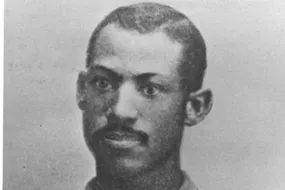
Everyone knows the name. Everyone remembers the number. But long before Jackie Robinson stepped onto Ebbets Field in 1947, there was Moses Fleetwood Walker.
Walker was a catcher for the Toledo Blue Stockings. In 1884, when Toledo joined the American Association, Walker became the first African American to play in the major leagues. It was a precursor to today’s American League. The timing was accidental. Walker had already been playing for Toledo when the American Association absorbed the team from the Northwestern League. He had helped them win the championship. He didn’t set out to make history. History just happened to find him.
He was college-educated. He knew the game inside out. Yet his stint at the highest level was cut short. An injury sidelined him after just 42 games. By the time he was trying to work his way back through the minors five years later, the doors were closing. In 1889, the Union Association folded. The owners of the two remaining major leagues tacitly agreed to ban Black players. The color line went up. Walker’s presence in Toledo had been permitted only because of a lack of available talent. Once competition stabilized, that excuse vanished.
Who Actually Cleared the Path?
The ban wasn’t absolute. It was just specific. Players who could pass as white or mixed-race often slipped through the cracks.
Take Albert “Chief” Bender. A half-Chippewa pitcher from Minnesota. He debuted in 1903 for the Philadelphia Athletics. Bender didn’t just play. He won. He captured three World Series titles over 14 seasons. In 1910, he posted an impressive 23-win campaign. He is now in the Hall of Fame.
Then there were the Latino players. Some 50 lighter-skinned athletes took the field before Robinson’s debut. They included Cubans like Rafael Almeida and Armando Marsans, who played for the Cincinnati Reds in 1911. Adolfo Luque was another standout. This flame-throwing pitcher won World Series titles with the Reds in 1919 and the New York Giants in 1933. They existed. They were good. They were just often categorized differently by an industry desperate to maintain segregation.
The Real Breakthrough
Jackie Robinson is rightly hailed as breaking baseball’s color line. But why him? Why 1947?
Robinson was the first unambiguously Black player to appear for a big league team in at least 60 years. The distinction matters. He didn’t have to hide behind ambiguity. He couldn’t.
Larry Doby broke the American League color barrier just months later, debuting with the Cleveland Indians in mid-1947. Doby played second fiddle to Robinson, largely because his impact was initially limited. He played only 29 games, collecting just five hits. Meanwhile, Robinson was leading the Dodgers to a World Series. The narrative favored Robinson. The media favored Robinson. The struggle was wider than one team, but the spotlight was singular.
Robinson’s arrival was the culmination of a long, grinding fight for integration. It was a step forward for the American civil rights movement. It opened the door for Willie Mays. For Roberto Clemente. For Juan Marichal. The talent influx was inevitable once the dam broke.
Life After The Diamond
Retiring in 1956, Robinson expected a place in baseball. He wanted to coach. He wanted to be an executive.
He got neither.
The baseball establishment wasn’t ready for him then, either. So he went into business. He took a position as vice president at the Chock full o’ Nuts restaurant chain. He became the first Black VP at a major American corporation. It was a different kind of diamond. A different kind of pressure.
He used that platform to fight harder. He integrated businesses across the country. He battled housing discrimination. He appeared at civil rights rallies. He didn’t stop playing the game just because he left the field.
Robinson died of a heart attack in 1972. He was 53.
The color line is gone now. The stats are cleaner. But the memory of who held the line shut, and who finally kicked it open, remains. Walker tried. Bender passed through. Doby shared the burden. But Robinson took the brunt of the fire. And in doing so, he changed the shape of the game forever.
Or did he? The conversation keeps turning. The numbers keep changing. But the image of that first step, white knuckles gripping the bat, remains the anchor.
The Batting Average That Shaped History
Let’s be real: hitting a baseball is brutally hard. Anyone who has ever swung a bat knows that success is an anomaly. At the major league level, a .300 average is the gold standard. That’s it. Three hits out of ten times at the plate. A “good” hitter fails seventy percent of the time.
Jackie Robinson didn’t just break color; he hit .311 for his career.
We obsess over the social milestone because it matters. It changed the country. But we often gloss over the fact that Robinson was also an elite athlete. You don’t get to that number by accident. You get there by being good enough to survive the pressure, the threats, and the sheer difficulty of the task.
Who Actually Broke the Barrier?
The story usually ends with Robinson in Brooklyn. It doesn’t. The barrier was porous before 1947, and it wasn’t just about race.
Before Robinson, there were others. Moses Fleetwood Walker played in the major leagues in the 1880s. He was an African American catcher for the Toledo Blue Stockings and briefly for the Cincinnati Reds. He played. He was ostracized. The era ended, segregation hardened, and Walker’s legacy was buried for decades. He is the forgotten man who actually integrated baseball first, only for the sport to retreat back into its own rules for sixty years.
Then there are the Cuban players. Light-skinned Cubans like Dolf Luque and Adolfo Luque crossed the line earlier. They played in the majors in the early 1900s. The logic was flawed but consistent: if you looked white enough, you were accepted. It wasn’t integration. It was assimilation.
The Negro Leagues Were the Proving Ground
You can’t talk about Robinson without talking about the Negro Leagues. They weren’t just a fallback. They were a major league in all but name. The talent was there. The passion was there. The economy of the leagues supported thousands of players.
Robinson didn’t emerge from nowhere. He came from the Kansas City Monarchs. He had already proven himself against the best Black players in the country. When Branch Rickey signed him, he wasn’t taking a risk on an unknown. He was taking a calculated risk on a proven winner who could handle the heat.
The integration of MLB wasn’t a sudden sunrise. It was a slow bleed. Larry Doby joined the Cleveland Indians later that same year, 1947. He faced different hurdles, playing in a different city with a different fan base. But he was there. The door cracked. Robinson pushed it open. Doby walked through.
Why It Matters Now
We remember Robinson for his courage. We should also remember him for his skill. A .311 average isn’t a fluke. It’s a statement. He wasn’t just a symbol. He was a hitter who understood the game at a level most players never reach.
The sources on this are plentiful. From Baseball-Reference to Sports Illustrated, the data points to the same conclusion: Robinson was a pioneer and a player. Both titles are required. You can’t have the history without the stats. You can’t have the stats without the history.
It’s hard to hit a baseball. Robinson made it look easy. That’s why we still talk about it.