The story of Chris Benoit remains one of the most baffling tragedies in sports history. In June 2007, the 40-year-old professional wrestler killed his wife, his young son, and then himself. The sheer horror of the event leaves most people searching for a motive that simply doesn’t exist in the traditional sense. But the answer wasn’t in his diary or his business dealings. It was in his skull.
Doctors from the Sports Legacy Institute, an organization focused on brain injuries in athletes, examined Benoit’s brain after his death. The results were chilling. His brain wasn’t that of a healthy 40-year-old. It was riddled with the clumps, tangles, and dead cells characteristic of severe Alzheimer’s disease. It looked like the brain of an 85-year-old man in the end stages of cognitive decline.
Benoit wasn’t an anomaly. Dr. Julian Bailes, who led the examination of Benoit’s brain, noted a disturbing pattern in other ex-athletes. After retiring from high-impact sports, many experienced severe personal and business collapses. The trajectory often ended in depression and suicide.
How does a man in his prime end up with a brain that resembles an octogenarian’s? The culprit is often repeated trauma.
Understanding Concussions
A concussion is not a metaphor. It is literally a bruise to the brain. When the head takes a blow or shifts suddenly, the brain floats within the cerebral fluid and slams against the interior of the skull. The result can range from mild disorientation to immediate unconsciousness.
Symptoms vary. Some people suffer memory loss, confusion, or headaches. Others experience dizziness, ringing in the ears, or an impaired ability to speak clearly. But the damage is cumulative.
Medical professionals often categorize concussions by severity:
- Grade One: Temporary disorientation without losing consciousness. Symptoms vanish within 15 minutes.
- Grade Two: Similar to Grade One, but symptoms persist for 15 minutes or longer.
- Grade Three: Sometimes called a “classic concussion,” this involves loss of consciousness, regardless of how brief.
The danger doesn’t end when the player stands up. For days after a concussion, the brain is hyper-vulnerable. If a person sustains another hit during this window—even a minor “mini concussion”—the damage compounds rapidly. In some cases, this can be fatal. This phenomenon is known as second impact syndrome, where the brain and its arteries swell to dangerous levels.
The Long-Term Damage
Many athletes suffer from symptoms that linger long after the physical bruises have faded. This is post-concussion syndrome. It includes anxiety, persistent headaches, nausea, memory lapses, and difficulty sleeping or concentrating.
These symptoms are insidious. They don’t show up on standard MRIs or CT scans. This invisibility makes diagnosis difficult and recovery longer. Many professional athletes have been forced to retire early because they could no longer function under the weight of these persistent symptoms.
But the physical toll is only half the story. Increasing evidence links repeated concussions in athletes to early-onset dementia and similar neurodegenerative disorders. The data is stark: with at least three concussions, the risk of developing early-onset Alzheimer’s disease increases fivefold.
The human body is resilient. It can heal from broken bones and torn ligaments. But the brain? The brain heals poorly. And the cost of that poor healing is measured in memories, emotions, and eventually, life itself.
Athletes and Concussions
Even a mild concussion isn’t harmless. When these injuries happen in quick succession, the long-term damage can be severe. We’re talking memory loss, diminished senses, and significant mood swings. Sure, a Grade One concussion might seem to clear up in 15 minutes. The symptoms vanish. But the brain? It might take a week or longer to fully heal.
And that’s just the start.
A Mayo Clinic study dropped a sobering statistic: a moderate head injury increases your risk of developing Parkinson’s disease by a factor of four. The risk skyrockets with more severe trauma. This isn’t just correlation. It indicates that head trauma is a contributing factor for some people who develop Parkinson’s.
Why Athletes Stay Silent
Boxers have known this for decades. They are notorious for suffering the long-term effects of concussions. The risk increases dramatically after you’ve already experienced one. Some of these effects have been observed, if not diagnosed or treated, for 80 years. Former boxers routinely experience blackouts, slurred speech, confusion, and mood swings.
Athletes often don’t tell others about concussions. They fear being labeled as lacking heart or losing a starting spot on a team. The problem with reporting concussions is particularly acute in the NFL.
According to a study at the University of North Carolina, the prevalence of depression in NFL players is directly related to the number of concussions sustained. Among surveyed players who had three or more concussions, 20.2 percent were clinically depressed.
The Reality of CTE
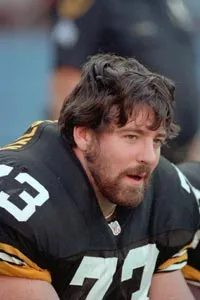
On Sept. 30, 2004, former NFL player Justin Strzelczyk died in a car crash at the age of 36. He was fleeing from police officers in a high-speed chase. A post-mortem test performed three years later showed Strzelczyk had brain damage akin to dementia.
The diagnosis was chronic traumatic encephalopathy (CTE). It’s also called punch drunk syndrome, boxer’s syndrome, or dementia pugilistica. Common in boxers, CTE is caused by head trauma. It develops on average 16 years after the first head injury.
The brain of a patient with CTE shows tangles and threads, such as those found in the brains of Alzheimer’s patients.
In later stages, CTE patients develop the symptoms of Alzheimer’s disease and dementia.
At least three other deceased NFL players have been diagnosed with or showed strong evidence of CTE. Mike Webster, Terry Long, and Andre Waters died, respectively, at ages 50, 42, and 44. Long and Waters committed suicide. Waters’ brain resembled that of an octogenarian with Alzheimer’s disease.
Ted Johnson made the link explicit. In February 2007, the former Patriots linebacker announced that his health problems, which include symptoms similar to those of early-onset Alzheimer’s disease, could be traced to concussions sustained in rapid succession as a player. He also said that Patriots coach Bill Belichick had pressured him to play in spite of a trainer’s advice.
One doctor told the New York Times that Johnson, who was 36 at the time of the announcement, could be in the advanced stages of Alzheimer’s disease by his 50s.
League Response and Ongoing Risks
That May, NFL Commissioner Roger Goodell established new rules for dealing with concussions. The league included better educating players about the injury. Plans were made to develop a system through which players and officials can report if a doctor or coach isn’t acting in the best interests of a player’s health.
The NFL players union created a charitable fund to aid former players suffering from dementia. Players now undergo neuropsychological tests before each season.
But here is the catch. Each team determines its own rules regarding when players with head injuries can resume activity. The safety net is there. The protocols exist. But the enforcement remains fragmented.
For more articles about concussions, dementia and other related topics, try the links on the next page.
Mega Millions of Hurt