The air in Pittsburgh hits different in late February. It’s that sharp, biting cold that makes your fingers go numb the moment you step out of the front door. You have maybe twenty seconds to get to the car before the chill sets in for real. But then you’re in the air, climbing out of Pittsburgh International Airport. You look down through a blanket of slate-gray clouds at the snow-covered ground below. Winter is done.
Hello, spring training.
Landing in Tampa feels like a different planet. You step out and the smell of the ocean hits you. The air is warm and sticky. You are in the land of palm trees and white sand beaches, wearing flip-flops to dinner. For six weeks, you get to watch the Pittsburgh Pirates play baseball in the cozy, intimate setting of McKechnie Field in Bradenton, Florida.
The schedule is packed. There is a game every single day from February 22 through March 28. The only exceptions are two lonely Tuesdays, but doubleheaders more than make up for the gap. The forecast is breezy 77 degrees Fahrenheit with sun. It’s a perfect day for baseball.
This 2013 spring training season in Florida marked 125 years of professional preseason baseball in America. It started in the late 19th century as a way to get part-time players into shape after the offseason. Now it’s a lucrative tourist attraction. It brings hundreds of millions of dollars to the Florida and Arizona economies every year.
Fans love it. But baseball writers and many players are critics. Do professional athletes really need six weeks of tuning up to get back into playing shape? Do broadcasters and sports journalists need to camp out in towns like Jupiter, Florida, and Surprise, Arizona? They send back thrilling footage of players stretching in the sun and 1-0 contests between glorified minor leaguers.
Let’s look at why spring training exists.
The Function of Spring Training
Baseball used to be a strictly northern game. Teams huddled in states like New York, Massachusetts, Illinois, and Pennsylvania. Most players held day jobs, working offseason construction or clerical gigs until the ice thawed enough for indoor drills. Then came the shift.
The Chicago White Stockings and Cincinnati Red Stockings broke ground by traveling south to New Orleans in 1870. They weren’t alone for long. By 1888, the Washington Capitals established a four-week camp in Jacksonville, Florida. The sun drew them in. Eventually, Arizona joined the party, cementing Florida and Arizona as the two premier spring training destinations for the next century.
Why Teams Still Train in February
Today, the purpose hasn’t changed much. It’s about conditioning. Veterans and rookies alike run intensive drills. They practice tricky rundowns, bunts, and cutoff plays. It isn’t just tanning. It’s about getting the body ready for the grind.
But it’s also a massive tryout.
By February, most 25-man rosters are set. However, there are always a few spots left open. Teams look to their Minor League “farm” systems for unproven talent. Top performers arrive as “off-roster invitees.” If they dominate, they earn a big-league spot. The Minors even run their own shorter spring training in March to support this pipeline.
The Economics of Sun and Dust
The biggest reason these camps exist might be tourism. It’s an economic engine.
Spring training is evenly split between the Grapefruit League in Florida and the Cactus League in Arizona. Both host 15 teams each. The money is staggering.
In 2013, Florida hosted more than 1.6 million fans. That crowd pumped an estimated $753 million into the state’s economy. Arizona wasn’t far behind. In 2012, the Cactus League generated over $422 million. Fifty-eight percent of those tickets were bought by out-of-staters.
Hotels, resorts, restaurants, shops, and golf courses in these sun-soaked cities make their living off this influx. It’s big business.
The Small-Town MLB Experience
Fans don’t just come for the economy. They come because it feels different.
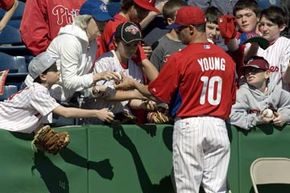
Major League Baseball with a small-town feel. The stadiums are smaller. Tickets are cheaper. Players are accessible. You can ask for an autograph or actually hold a conversation.
The formality drops away. A boyish exuberance takes its place. It’s the return of the American pastime.
Look at the antics. Actor Billy Crystal, at age 59, went to bat for the Yankees in a spring training game. Players ride bicycles home from games in full uniform. Gloves dangle from the handlebars like school kids heading to class.
So where do you go to see your team up close?
The Grapefruit League: Florida’s History
Florida established itself as the preseason destination first. It became a state in 1845, after a bloody conflict to remove the Seminole people. The state evolved from swampy wilderness into citrus groves and industrial outposts after the Civil War.
Northern tourists arrived in the 1870s. They wanted the weather. They wanted the beaches.
The Washington Nationals were the first to set up camp in Jacksonville in 1888. They played the first Major League exhibition road game against the New York Giants. It was a historic moment.
Then the Nationals went 48-86 in the 1888 season.
Florida’s luster faded. It took 15 years for baseball to return to the Sunshine State.
The Cubs’ Offer That Started It All
In 1913, the mayor of Tampa made a move. He offered the Chicago Cubs $100 per player to train in Florida.
It worked.
By 1914, more teams followed. Clubs trained in St. Petersburg, St. Augustine, Jacksonville, and Tampa. The seeds of the Grapefruit League were officially sown.
Today, 15 MLB teams call Florida home from late February through mid-March. They represent a mix of American and National League squads. Most hail from cities east of the Mississippi.
Exceptions exist. The Minnesota Twins and the Houston Astros play in Florida despite being western or central teams.
There is no Grapefruit League champion. Teams play official exhibition games against each other, but the standings don’t matter.
Here are the teams and their Florida locations:
- Atlanta Braves (Lake Buena Vista)
- Baltimore Orioles (Sarasota)
- Boston Red Sox (Fort Myers)
- Detroit Tigers (Lakeland)
- Houston Astros (Kissimmee)
- Miami Marlins (Jupiter)
- Minnesota Twins (Fort Myers)
- New York Mets (Port St. Lucie)
- New York Yankees (Tampa)
- Philadelphia Phillies (Clearwater)
- Pittsburgh Pirates (Bradenton)
- St. Louis Cardinals (Jupiter)
- Tampa Bay Rays (Port Charlotte)
- Toronto Blue Jays (Dunedin)
- Washington Nationals (Viera)
The Cactus League and the Catalina Cubs
The other half of Major League Baseball heads west to Arizona.
Before the Cactus League fully took over, there was the era of the “Catalina Cubs.”
William Wrigley Jr., the chewing gum magnate, bought the Chicago Cubs in the 1920s. He also owned Catalina Island off the California coast. Every spring, he shipped the team there.
Fans thronged to watch the “Catalina Cubs.”
It helped that the Cubs won league pennants in 1929, 1932, 1935, and 1938. The migration continued until the 1950s.
Now the focus is strictly on the Arizona desert. But the history remains. The teams are still chasing something. The crowd is still watching. And the bicycles are still rolling.
Bill Veeck didn’t do things by the book. The Cleveland Indians owner was a publicity stuntster who handed out live animals at games and staged weddings at home plate. He famously sent Eddie Gaedel to the plate, a three-foot-seven-inch dwarf who couldn’t strike out because he couldn’t reach the strike zone. Veeck also broke barriers, signing Larry Doby, the first African-American player in the American League, in 1947. He followed that up by signing Satchel Paige, the oldest rookie ever, at age 42.
When most MLB teams flocked to Florida for spring training in the 1940s, Veeck looked west. He owned ranch property in Tucson, Arizona. The weather was temperate. The air was dry. It was the perfect place for baseball.
The New York Giants took up residence in nearby Phoenix the same year, 1947. They established a foothold. Soon, Arizona’s Cactus League emerged as a vacation destination that rivaled Florida. Golf courses stretched for miles. The climate was ideal.
Money Talks in the Desert
Teams aren’t required to join one league or the other. Sometimes money makes the decision. In 2008, the tiny Arizona town of Goodyear needed a lifeline. Its population was just 59,548. They wanted the Cleveland Indians back. The team had trained in Winter Haven, Florida since 1993.
Goodyear built a $76 million, 10,000-seat ballpark. The local city government partially funded the project. The Cincinnati Reds saw the plans for the new stadium and the extensive “ballpark village.” They were impressed. They relocated to Goodyear too.
Today, 15 teams compete in the preseason Cactus League. It’s a mix of American and National League clubs. All but two teams hail from west of the Mississippi. The Chicago White Sox and Chicago Cubs are the outliers.
Here is where they stay:
- Arizona Diamondbacks (Scottsdale)
- Chicago Cubs (Mesa)
- Chicago White Sox (Phoenix)
- Cincinnati Reds (Goodyear)
- Cleveland Indians (Goodyear)
- Colorado Rockies (Scottsdale)
- Kansas City Royals (Surprise)
- Los Angeles Angels of Anaheim (Tempe)
- Los Angeles Dodgers (Phoenix)
- Milwaukee Brewers (Phoenix)
- Oakland Athletics (Phoenix)
- San Diego Padres (Peoria)
- San Francisco Giants (Scottsdale)
- Seattle Mariners (Peoria)
- Texas Rangers (Surprise)
The Fan Experience
There is an advantage for vacationing baseball fans. Cactus League stadiums are much closer to each other geographically than Florida. You can catch multiple games in the same day. You can hop from one Arizona stadium to another.
For lots more information about the history and future of America’s favorite pastime, check out the related HowStuffWorks links on the next page.