
November brings gray skies and cold air. You want warmth. You want flavor that sticks to your ribs but feels light enough for an evening drink. Butternut squash delivers. It is the queen of autumn-winter produce. Its color is solar. Its texture is meltingly soft.
This dip wraps you in comfort. It also offers a bright, spicy kick. Think toasted bread. Dip it into velvet-smooth spread. It is seasoned with cumin and paprika. Roasted garlic adds depth. A splash of lemon juice wakes up your taste buds. This isn’t just food. It is an announcement of the cozy season. It signals long nights, happy reunions, and generous snacks.
The magic lies in the balance. Sweet squash meets bold spices. The result is a dip that travels your palate without overwhelming it.
Ingredients
The base requires patience. You need a squash that is fully ripe. This concentrates the sugars. It creates an ultra-onctueuse (ultra-creamy) texture when blended. The ingredient list is simple. The surprises, however, make it special.
You will need:
- 500 g of butternut squash (potimarron or musquée work well too)
- 2 tablespoons of olive oil
- 1 plain yogurt or 100g of fresh cheese
- 1 clove of garlic
- 1 teaspoon of ground cumin
- 1 teaspoon of sweet paprika
- Juice of half a lemon
- Salt and freshly ground pepper
You can tweak this base. Add fresh herbs. Toasted seeds add crunch. Crushed hazelnuts bring nuttiness. A handful of pumpkin seeds works too. A pinch of cilantro adds freshness. For a smoky twist, try a hint of smoked paprika or zaatar. These variations keep the classic flavor profile while adding elegance.
The Process
Start with the squash. Cut it in half. Remove the seeds. Roast it in the oven until the flesh is tender. This takes about 45 minutes at 200°C (400°F). The skin should pull away easily.
While the squash roasts, prepare the garlic. Roast a whole clove with a drizzle of olive oil. It becomes sweet and mellow. No sharp bite.
Once the squash is cool enough to handle, scoop out the flesh. Put it in a food processor. Add the roasted garlic. Add the olive oil. Add the yogurt or fresh cheese. Blend until smooth.
Now, introduce the spices. Add the cumin and paprika. These spices need heat to bloom. If your processor allows, pulse while the mixture is still warm, or briefly reheat it in a pan after blending. This releases the essential oils. The flavor deepens significantly.
Taste it. Add the lemon juice. The acid cuts through the richness. It prevents the dip from feeling heavy. Season with salt and pepper. Adjust the acidity if needed. Some people like more lemon. Others prefer the earthy dominance of the cumin. Find your balance.
Serving Ideas
This dip shines on toasted bread. Baguette slices work best. They provide a crunchy contrast to the soft spread. You can also serve it with raw vegetables. Carrots. Celery.
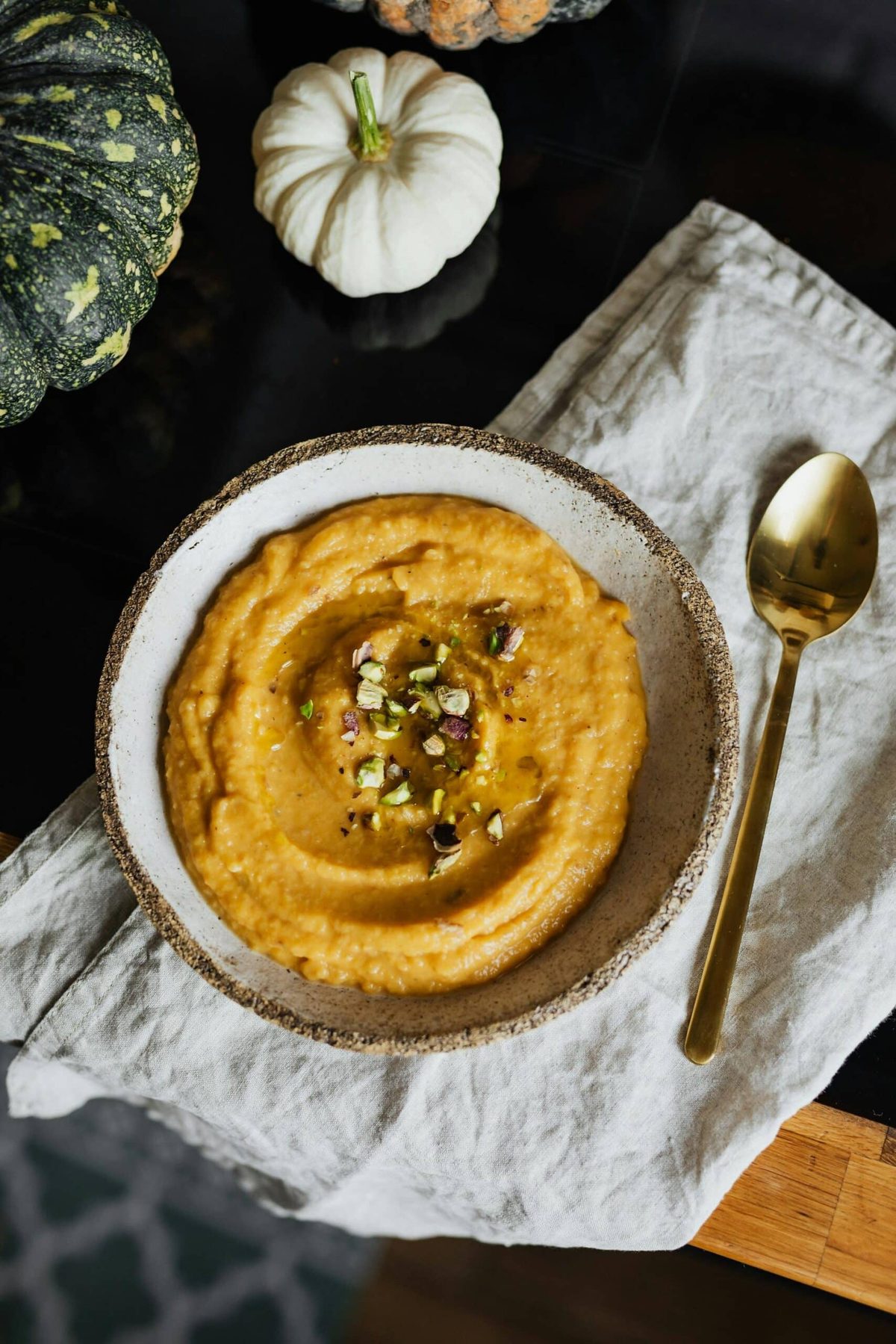
The secret to a spread that is both rich and deeply aromatic lies in roasting the squash. This process draws out natural sugars and adds a layer of complexity that raw or steamed vegetables simply can’t match.
Dice your squash into cubes. Lay them on a parchment-lined baking sheet. Toss in whole garlic cloves and drizzle with olive oil. Season generously with salt and pepper. Roast at 200°C for 30 to 35 minutes. You know it’s ready when the pieces collapse easily under a fork.
Once they cool slightly, transfer the squash and peeled garlic to a bowl. Add fresh cheese or yogurt. Sprinkle in cumin and paprika. Adjust the seasoning and pour in lemon juice.
Blend it until silky smooth. Or mash it with a fork if you prefer a rustic texture. The goal is a creamy dip or a thick spread.
For maximum creaminess, finish with a drizzle of olive oil, lemon zest, a pinch of chili, or a few drops of honey to balance sweet and savory notes.
Chill the mixture. Let the flavors meld for a sharper, more harmonious result.
Serving Ideas for a Gourmet Appetizer
This vibrant orange dip pairs well with seeded crackers or toasted bread. It also shines with crunchy vegetables. Try carrot sticks, black radish slices, or thin shavings of kohlrabi for a textural surprise.
Warm pita bread or soft blinis work beautifully too. They cradle the spicy creaminess of the squash.
Go festive by plating the spread on a board. Surround it with sun-dried tomatoes, vegetable pickles, black olives, and cubes of aged cheese. The colors, aromas, and textures turn any appetizer hour into a sensory celebration.
Three Solar Variations to Keep It Interesting
This recipe adapts to almost any mood. Start with a roasted butternut and cumin base. Add toasted hazelnut bits for crunch. This version feels chic and autumnal.
Craving freshness? Mix the squash puree with fresh cheese and chopped cilantro leaves. The herbal perfume makes it perfect with a dry white wine or a wintery spritz.
Need something fast? Combine roasted squash, strained yogurt, smoked paprika, and lemon zest. It’s ready in minutes. Take it to the park for an impromptu Sunday picnic.
Storage Tips and Presentation Tricks
Good news: this dip improves with time. Store it in an airtight container in the fridge for up to three days. The flavors intensify, making it even more indulgent for late-night cravings.
To impress at your next gathering, use colorful dishes. Garnish with golden pumpkin seeds, extra lemon zest, or fresh coriander petals right before serving. Swirl the dip into a spiral. Drizzle with olive oil. Invite guests to dive into this spiced sea of sweetness.
The first spoonful transforms a winter appetizer into a moment of sharing. Light, flavorful, and full of energy. Roasted pumpkin spread, enhanced with spices and zest, becomes the star of a reimagined season. It’s enough to joyfully disrupt your usual appetizer routines.