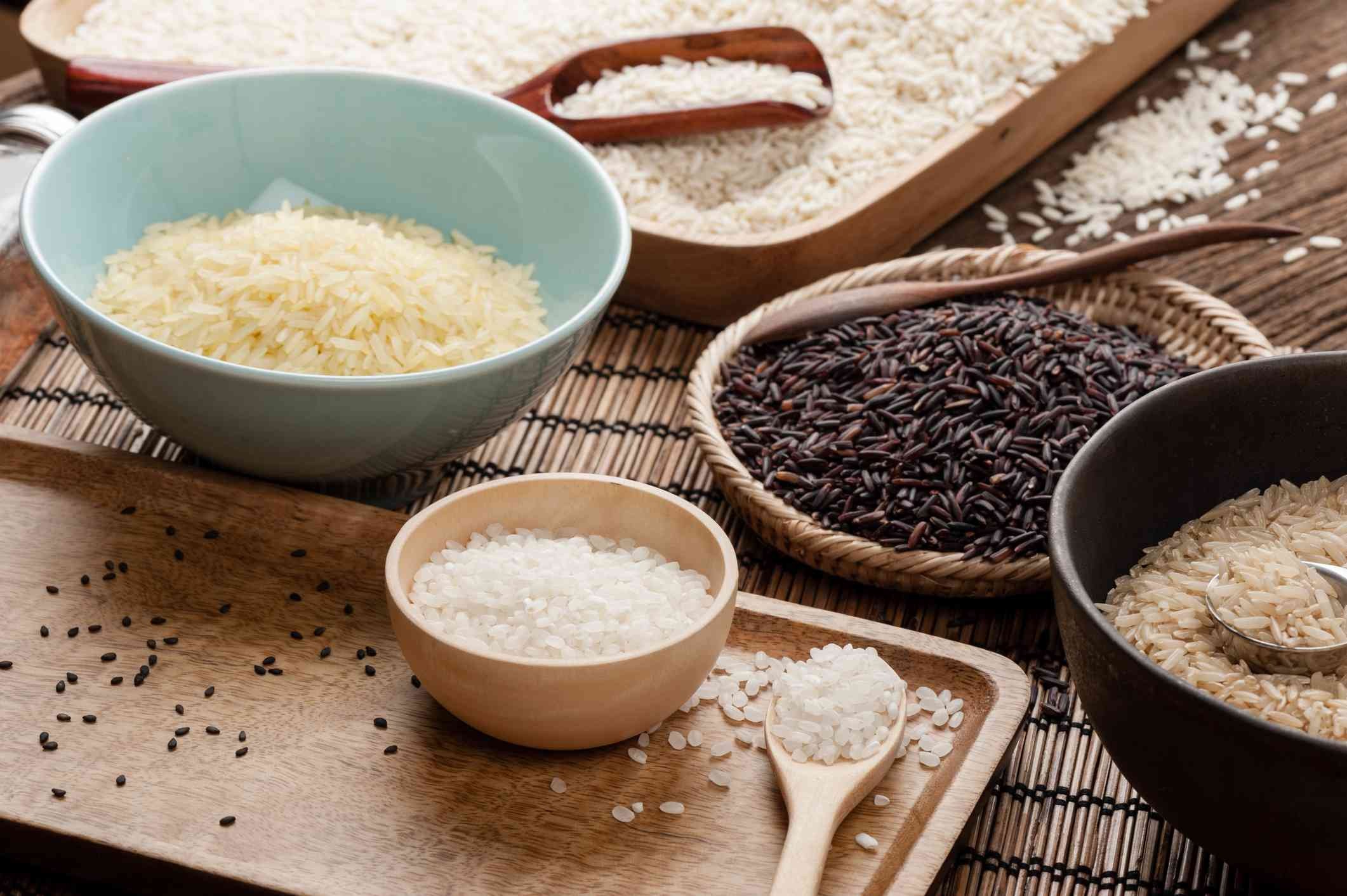
Rice isn’t just rice. The color changes the game. Antioxidants, vitamins, minerals — it all depends on the grain you pick. Some options have a low glycemic index. Good for blood sugar. Bad? Well, sometimes arsenic is lurking too.
Brown Rice: The Whole Grain Staple
It’s a whole grain. That means the bran and germ stay on.
Half a cup cooked weighs about 98 grams. You’re looking at 109 calories. 23g of carbs. 2.3g protein. Fiber sits at 1.8g. B vitamins? Magnesium? Zinc? Check.
The GI is low. Blood sugar creeps up rather than spikes. But here is the catch. Arsenic hangs around the outer layer. Brown rice keeps that layer. White rice strips it off during milling. So yes. Brown has more arsenic than the white stuff. Trade-offs everywhere.
Black Rice: The Anthocyanin Powerhouse
Look at that purple-black hue. Those are anthocyanins. Antioxidant compounds galore.
They help with glucose levels. They help with fats in the blood. Heart disease risk might take a hit. Half a cup (82g) gives you 82 calories. Less carbs than brown at 17.2g. More protein at 3.3g. Selenium makes the list here.
Don’t mill it to death though. Processing strips away the good stuff. Pick whole or lightly milled varieties. You want the color. The color is the medicine.
Red Rice: Nutty and Aromatic
Smells like basmati. Tastes nutty. The red pigment? Anthocyanins again.
Half a cup yields roughly 92 calories. 19g carbs. Protein dips slightly to 2.1g. Fiber is sparse — less than a gram. It’s tasty. But nutritionally, it sits in the middle of the pack compared to the darker cousins.
Purple Rice: The Sweet Variant
Similar to the red and black varieties. Loaded with anthocyanins too.
The taste profile is different. Sweeter. Half a cup offers 90 calories. 19g carbs about 2g protein and 1g fiber. Science is still catching up. We don’t know exactly how it impacts blood sugar long-term. More research needed. For now. Just assume it’s decent.
Wild Rice: Not Actually Rice
Technically? It’s a grass seed. Aquatic. Grows in water.
This changes the nutritional game. Protein goes up to 3.3g for a half-cup serving (82g). Calories drop to 83. Fat content is lower.
Here’s why it matters. Resistant starch. Wild rice has more of it. Resistant starch is hard to digest. Your body doesn’t break it down quickly. Blood sugar stays stable. White and red rice? They spike faster.
Digestible starch raises glucose fast. Resistant starch plays it slow.
Should You Eat White Rice?
White rice is just brown rice that went to the gym. Or the mill. Same difference. The nutrients left with the hull.
Half a cup has 121 calories. 26.6g carbs. Fiber? Barely anything. 0.2g. It shoots glucose through the roof. High GI. Not great if you have diabetes. Not ideal if you watch your blood sugar.
Some varieties get enriched. Manufacturers pump back in iron. B vitamins. Selenium. Keep the water when you cook it. Those minerals dissolve easily. Drain it. You lose the enrichment.
Is it useless? No. Athletes eat it. Rice cakes are quick fuel. Carbs convert to energy rapidly. Sometimes you want that spike. Context matters.
The Arsenic Question
Arsenic gets into the soil. Nature does it. Humans do it too.
The hull holds the toxin. Milling removes the hull. White rice wins on cleanliness here. Brown rice loses. Acute toxicity requires huge doses. You’re safe there.
But long term? Low dose exposure adds up. It might link to diabetes risks.
Fix it by cooking differently. Rinse it. Cook in lots of water. Drain the water. California-grown rice usually has lower levels. Location, location, location.
How to Actually Eat It
A 2000 calorie diet allows 1 to 2 cups of cooked rice. Daily. If it’s whole grain.
Stir-fry base? Brown or black rice. Salad bowl add-in? Wild or purple. Soup thickener? Sure. Side dish? Obvious.
Homemade rice cakes? Cheap. Simple.
Eat what suits you. Watch the arsenic. Maybe mix it up. Why pick one enemy to fight anyway. 🍚