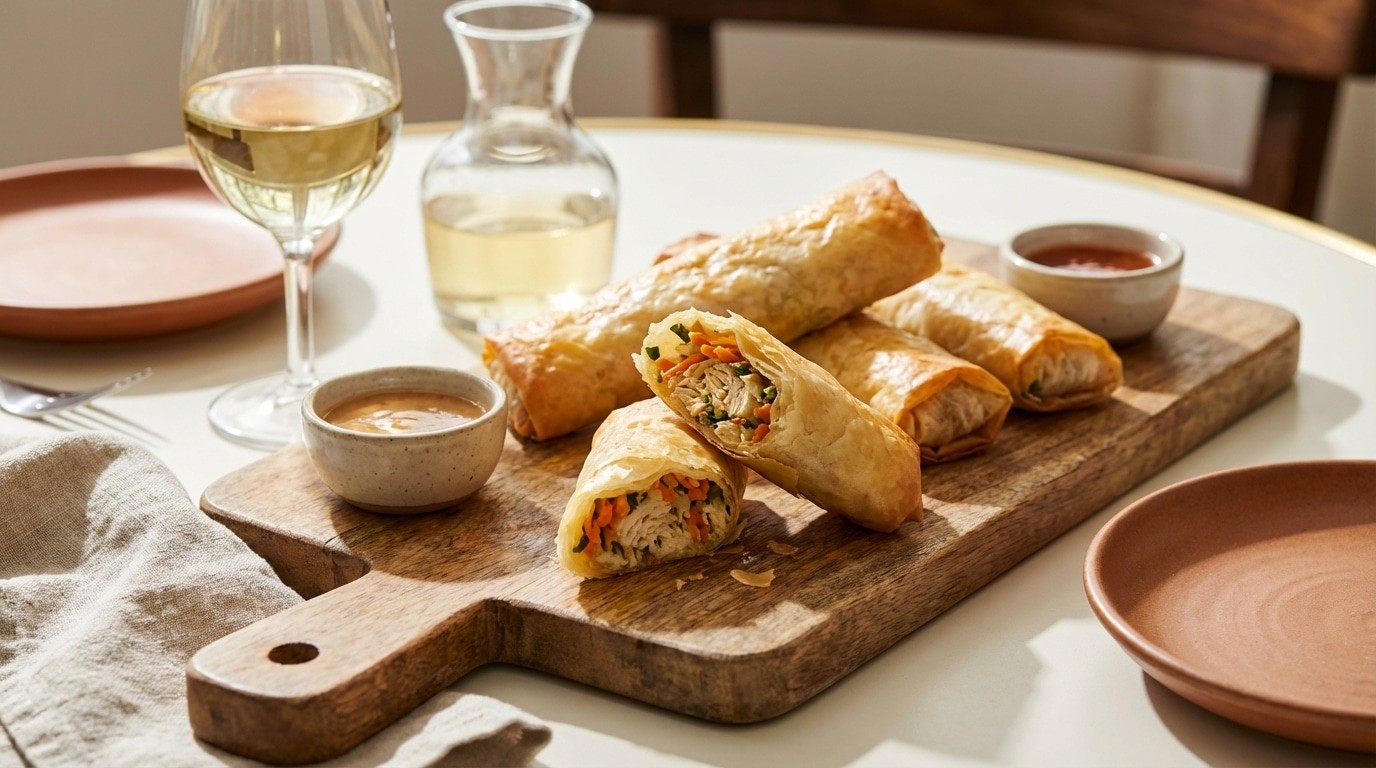
There is a specific time of year when the body demands texture. The days get longer, the air warms up, and suddenly you want something crisp, golden, and aromatic to eat with your fingers. Oven-baked chicken spring rolls fit that slot perfectly. They sit somewhere between a lingering appetizer and a light dinner, smelling of fresh mint and coriander. When they come out of the oven, the rice paper shatters under your teeth while the filling stays soft. A sharp dipping sauce wakes up the whole plate. The trick that makes this work is not complex. It is a simple vegetable, shredded finely, tucked into the meat. It browns the surface without oil and adds a market-fresh sweetness.
Why shredded carrots make spring rolls crispy without oil
The real technique relies on very finely shredded carrots. They provide controlled moisture. This keeps the filling tender without making the rice paper soggy. The natural sugars in the carrot help the surface brown in the oven, especially when the rolls are spaced out on the baking sheet and cooked at high heat.
Choose firm carrots. Shred them until they are almost powder-like so they melt into the ground chicken. Wring the excess water out with a clean cloth. This step changes everything. The filling stays moist, but the rice paper becomes crisp instead of mushy.
Most failures happen for the same reasons. A sheet soaked too long. A roll wrapped too loosely. A crowded baking sheet. Heat needs to circulate to dry the surface. If one spring roll touches another, it loses its crispness and color. A two-stage cook with a flip finishes the job without a single drop of oil.
Ingredients for herb-infused chicken-carrot filling
- 400 g ground chicken
- 2 carrots (about 200 g), shredded very fine
- 2 cloves garlic
- 1 small scallion (or 1 shallot)
- 15 g fresh coriander
- 10 g fresh mint
- 1 tablespoon nuoc-mâm fish sauce
- 1 tablespoon soy sauce
- 1 teaspoon fresh grated ginger
- A pinch of chili (optional)
- 20 g fine breadcrumbs
- Black pepper
What you need for assembly and browning
- 12 rice paper sheets (22 cm diameter)
- 1 large bowl of warm water
- 1 clean, slightly damp towel
- 1 tablespoon soy sauce (for brushing)
- 1 tablespoon water
- 1 baking sheet
- 1 sheet of parchment paper
How to prepare the filling
Press the shredded carrot in a clean towel. Remove only the free water. Add it to the ground chicken. Finely chop the garlic, scallion, coriander, and mint. This creates a fragrant, well-bound mixture.
Add the nuoc-mâm, soy sauce, ginger, and pepper. The breadcrumbs adjust the texture. The filling should hold its shape in a ball. It needs to be pliable, not wet. Let it rest in the fridge for 10 minutes so the flavors merge.
Softening rice paper without drowning it
Dip each sheet in warm water for only 5 to 8 seconds. Do not soak it. Lay it on the damp towel. It finishes softening on its own. The surface becomes flexible without turning sticky.
Rolling tight spring rolls for even cooking
Place a portion of filling near the edge of the sheet. Fold the sheet over the filling. Fold the sides in. Roll it tightly. A clean roll ensures uniform cooking: no leaks, and a tight surface that browns better.
Baking to a golden brown
Preheat the oven to 220 °C. Place the rolls on parchment paper, spaced far apart. Brush the tops lightly with a mix of soy sauce and water. This helps the browning and creates a glazed look without oil.
Bake for 10 minutes. Flip them. Bake for another 8 to 10 minutes until the color is deeply amber. Keep the sheet in the middle of the oven for even heat: a thin crust and a juicy center.
Getting the final crunch
When they come out of the oven, let the rolls rest on a wire rack for 2 minutes. Do not put them on a plate. The steam escapes. This sets the crunch instead of softening the rice paper.
Restaurant-style twists: flavors, variants, and sides
The chicken-carrot base handles variants well. Use ground turkey with the same principle: well-pressed carrot and adjusted breadcrumbs. For a shrimp version, mince shrimp with a knife for a bouncy, salty texture. For tofu, crumble it and add a little more breadcrumb to keep the filling compact and flavorful.
To push the aromas, lime zest works wonders. A little more garlic or ginger helps too. Keep the herbs generous but always well-drained. The goal is an ultra-fresh smell without excess moisture.
For dipping sauces, a light nuoc-mâm mix with water, sugar, and lime juice fits the crunch perfectly. A rounder peanut sauce loves mint and chili for a creamy, spicy contrast. Quick pickles (carrot, cucumber, rice vinegar, salt, sugar) add a tart and refreshing crunch.
To keep the crunch the next day, reheat the rolls in the oven at 200 °C for a few minutes, directly on a rack. Cooking in batches lets you prepare more ahead of time, then warm them up at the last minute. The surface becomes crisp again, and the filling stays soft.
Why your golden oven nem roll needs a tight wrap and a quick dip
The difference between a soggy mess and a crisp, amber-hued success comes down to execution. You are not frying these. You are baking them into something that shatters slightly on the first bite.
The core mechanic is simple. Press the finely grated carrot hard into the minced chicken and herb filling. This juice retention is non-negotiable. A quick dip in water makes the rice paper pliable but fragile. Roll it tight. If the wrap is loose, steam escapes, and the skin stays soft.
How to get that crispy, oil-free surface in the oven
Place the rolls on a well-ventilated tray. Airflow matters more than heat here. Flip them halfway through the cooking time. This ensures even browning on both sides. The goal is that specific golden color, a deep amber that signals the rice paper has transformed into a crisp shell. No oil involved. The fat comes from the filling, not a frying pan.
Which flavor profile actually holds up in the heat?
You can dial the intensity however you like. Fresh herbs and lime juice cut through the richness of the chicken. Pickles and dipping sauces add a second layer of complexity after the first bite. The debate usually settles on freshness versus heat. Which one actually makes you want a second roll? The answer depends on how much sweat you are willing to tolerate. Some people find the spicier version addictive. Others prefer the clean, bright note of the lime. Neither is objectively better. Both work, provided the structural integrity of the roll survived the oven.
The final product is a balance of textures. Jucy inside, brittle outside. If the exterior isn’t crisp, the entire concept collapses. Tight rolls, hot air, and a mid-cycle flip are the only variables that matter. Everything else is flavor preference.