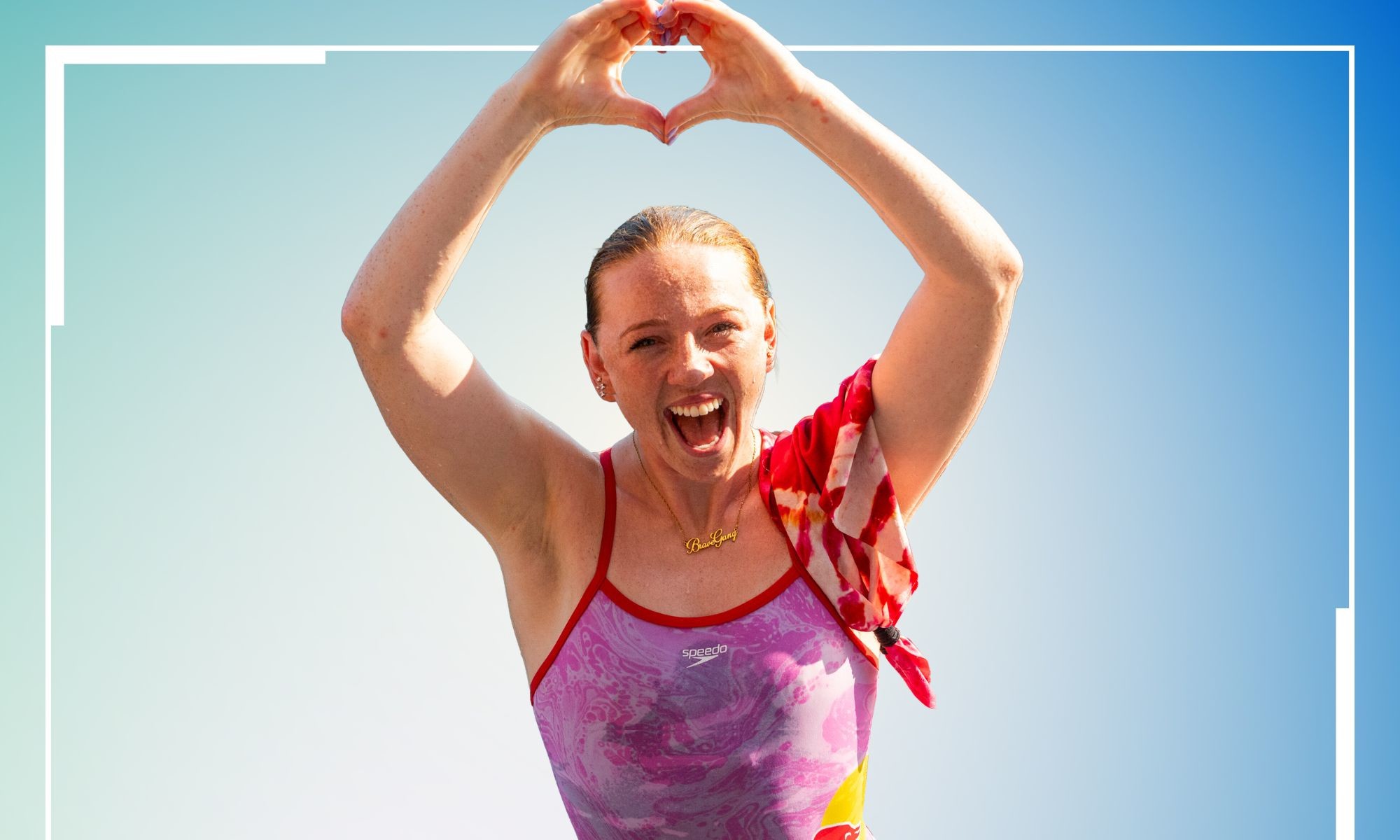
Molly Carlson didn’t mean to fall.
It was 2025. The platform was 22 meters high—that’s over 70 feet. A six-story building. She was preparing for a running dive off the edge of a Red Bull event, the kind that turns casual viewers into adrenaline junkies overnight. But she had mismeasured her stride.
Her feet hit the edge too far forward. They slid. Suddenly, gravity took the wheel before she was ready. She was in the air, spinning through a dive she hadn’t planned to take. No quad flip. Just a chaotic, unplanned rotation.
She hit the water safely after two flips. It wasn’t the routine. But it was memorable.
“I can remember that dive like it was yesterday,” Carlson says now. “It just lives rent-free in my brain.”
Most people hear “cliff diving” and think of fearless gods who hurl themselves into the void without a second thought. That’s the myth. Carlson, a World Series athlete and one of the faces that brought this niche sport to millions, knows the truth. Fear isn’t the enemy. It’s the tool.
If you’ve ever felt too anxious to jump into a new career or start a hard workout, listen closely. The bravest people aren’t the ones without fear. They’re the ones who use it to stay sharp.
The Origin of the Fear
Carlson didn’t start out as an extreme sports icon. She grew up in Thunder Bay, Ontario. At eight, she was playing on the one-meter springboard. She loved the feeling of defying gravity. At nine, she jumped off the 10-meter platform, becoming the first kid in town to do so.
Everyone called her fearless. She hated the label.
“I’ve always lived with anxiety and stress,” she admits. “But my actions would always show otherwise. I thought that was special.”
She earned a scholarship to Florida State for traditional springboard diving. Then COVID hit. Practice stopped. Isolation set in. Two months into lockdown, boredom turned into restlessness. Then a message came in from Team Canada: Come to Montreal. Try the 20-meter platform.
Her gut reaction was a hard no. Heights weren’t her thing. But she went.
The platform was 18 meters then. Nearly six stories. When she looked down, time seemed to stop. “It felt like time stopped in the air,” she recalls. “That jump took at least five minutes. I was flying.”
For someone whose mind usually races with anxiety and spirals, that stillness was addictive. It was bliss. She realized then that high diving wasn’t about removing fear. It was about finding the quiet inside the chaos.
Fear Keeps You Alive
Let’s clear this up: cliff divers are not unafraid.
“We’re all scared up there. We’re all stressed,” Carlson says. “You need that little ounce of fear to stay sharp. It’s supposed to be there. It keeps you safe.”
Without that edge, you get sloppy. With it, you enter what athletes call a flow state. Your brain shuts off. Your body takes over. You become a machine.
But you can’t fake this. The physical toll is immense. Women hit the water at 75 km/h (46 mph). Men hit 85+ km/h (52+ mph). That’s not water. That’s concrete.
“Feels like hitting concrete,” Carlson says.
The impact is so punishing that divers are restricted. Only four days a week of high-dive practice. Two days off to let the cartilage recover. Four months off the 20-meter platform entirely every year. Because of knee issues, Carlson avoids loading her back. Her training looks less like diving and more like combat prep.
Trap bar deadlifts. Box jumps. Neck work. Core stability. She tapes her knees now. Two MRIs showed she’s lacking cartilage—a legacy injury from being an early pioneer in a sport with no permanent training facilities when she started.
She does this because every dive lasts three seconds. What fits in three seconds? Speed. Power. Precision.
Ground Zero
After that slip in 2025, a major competition loomed a month later. She had to relearn the dive that had gone wrong. Naturally, her mind rebelled. Mental blocks kicked in.
Her solution? Start at zero.
She took the running approach practice to flat ground. Ten reps. Clean. Then three meters. Clean reps. Then five. Seven. Ten. Fifteen. She built confidence from the dirt up.
“As soon as I built up the confidence, I knew I’d be fine,” she says.
This is the secret weapon for anyone stuck in a rut. Don’t rush back in. Don’t force it. Go back to what you know you can nail. Baby steps build the foundation. Rushing back destroys it.
The Filter is Broken
Before she was “The Brave Gang” founder, Carlson was a filter girl.
She grew up on Instagram, curating perfect lives while hiding behind Snapchat filters and insecurities. She trained with Olympians who only posted flawless dives. She internalized the pressure to be perfect.
Then came the dark days. A 5’7″ athlete surrounded by 5’2″ rivals. She started wondering if getting smaller was her only path to the Olympics. It was a lonely time. A toxic time.
COVID changed everything. Carlson started making TikToks. Just for fun. She’d jump off a roof into a pool while her friends sat on their couches. She was funny. She was terrified. She was real.
The videos blew up. Then a million followers.
She realized people didn’t want perfect. They wanted human. Authenticity became her bravery. She launched the Brave Gang hashtag—a place for people to share small acts of courage. First cartwheels. Coming out stories. A mom’s first date after divorce.
“These are big things,” Carlson says. “It takes so much bravery to do small things that people don’t understand.”
Staying Grounded on the Road
Cliff diving is a traveling circus. Six months a year, she’s on the road. How does she survive the chaos? Rituals. Not indulgences.
Here is her protocol:
- Stay an extra day: Don’t fly home immediately after a three-day comp. The adrenaline drop wrecks you. Stay one extra day to sleep and let the body reset.
- Hydrate relentlessly: Travel plus heat plus competition equals dehydration. Drink water like your life depends on it. It does.
- Skincare is non-negotiable: She’s ginger. The sun is brutal. Same routine everywhere creates normalcy.
- Makeup for control: She spends 30 minutes on makeup before diving. Not for the judges. For her. It grounds her.
- Foot hammocks on planes: Hook an inexpensive hammock to the tray table. Elevate your feet. Prevent swelling. It’s a game-changer for recovery.
The Takeaway
Carlson doesn’t want you to be fearless.
She wants you to feel the fear. She wants you to acknowledge it. Then use it.
“Accepting that fear is 1000% allowed to be there is the first step to doing cool stuff,” she says.
Bravery and anxiety don’t have to be enemies. They can live side by side. You don’t need to lose the nerves to hit the water. You just need to trust your body to know what to do next.
And if you slip?
You’ll probably land safely. But you’ll remember the dive for the rest of your life.