In August 2014.
Panic. The West African outbreak was accelerating. Americans were being airlifted home. I wrote a piece for Forbes titled “Ebola Has Landed.”
It wasn’t just about a virus crossing borders. It never is. The fear was about what Ebola signaled. Globalization. Fragile health systems. Political hesitation. Bio-defense failures. We were building a world vulnerable to biological shocks.
Two weeks later. Bloomberg-Businessweek. I argued something blunt. The crisis would not end without military help.
Controversial? Yes. Correct? Time showed me.
Ebola had stopped being just a humanitarian disaster. It was a national security threat.
A Dozen Years. Same Cracks.
Eleven years passed. (Twelve, if you count the current return in 2026.) Most vulnerabilities from 2014 remain. Unresolved.
Ebola occupies a weird spot in the global mind. It is both the defining disease scare of our time and largely ignored. Everyone talks about COVID now. But Ebola was the rehearsal.
Did we learn? No.
The failures were visible in West Africa then. Delayed tests. Broken communication. Hospitals overwhelmed. Supply chains snapped. Politicians paralyzed.
Then came the difference.
Scale.
The Math of Disaster
West Africa, 2014. 28,000 infected. Over 11,000 dead across Guinea, Liberia, Sierra Leone.
Health systems didn’t just fail. They collapsed. Hospitals became hubs for infection. Nurses died in droves. Traditional burial practices turned communities into dead zones.
The shock was this: We believed we were ready. We were not.
Did things change? Yes, but only in the labs. Not in the institutions.
Science Solved One Piece. Not The Whole Puzzle.
Vaccines arrived. Monoclonal antibodies followed. Highly effective against the Zaire strain. Ring-vaccination worked in the Congo later. Survival rates jumped.
Science solved the Zaire problem.
But science cannot fix a broken state.
Outbreaks continue. Central and East Africa. DRC. Uganda.
Why? The virus lives in animal reservoirs. Forests are cleared. People migrate. Conflict spreads. Humans encroach. Spillover is inevitable.
The danger isn’t just the mortality rate. It’s the context.
Take the current Bundibugyo strain outbreak. Unlike Zaire, there is no widely licensed vaccine for it. No proven therapy. Containment relies on the old way: early detection. Isolation. Logistics. International coordination.
We Are Still Reacting. Never Prepared.
Outbreaks are stress tests for geopolitics, not just medicine.
Ebola thrives where governance fails. Where healthcare is underfunded. Where trust is dead.
In 2014, Médecins Sans Frontiers said civilian efforts wouldn’t work. Peter Piot, who co-discovered Ebola, called for “quasi-military” intervention.
The U.S. launched Operation United Assistance. Engineers. Transport. Treatment centers in Liberia.
Extreme then? Yes.
Realistic? Absolutely.
Anger Burns. Again.
Distrust kills. It has always been part of the virus.
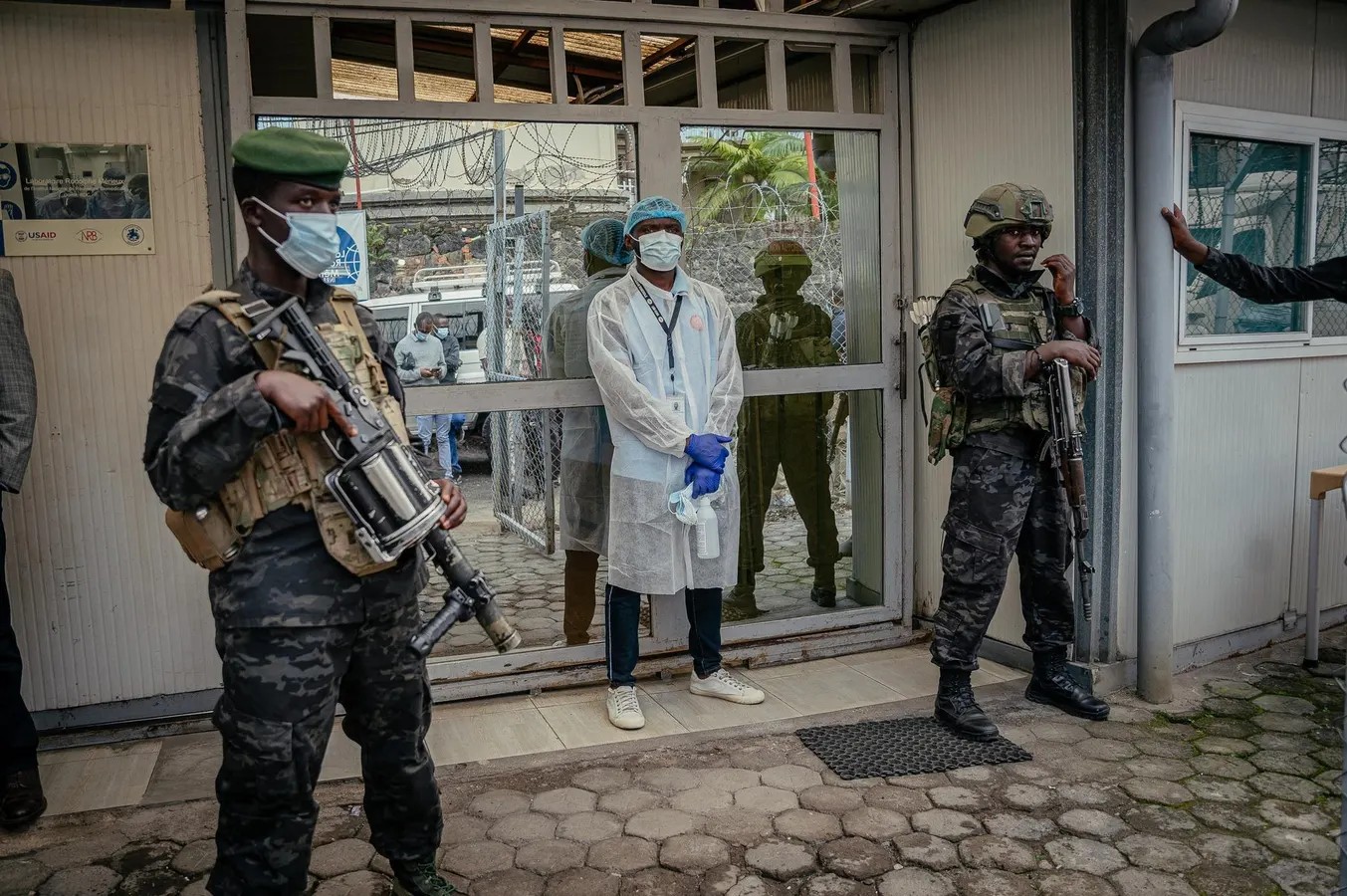
In 2014 in Guinea, healthcare workers were murdered. The Womey massacre saw eight outreach team members killed. Villagers believed the response was a conspiracy.
Fast forward to 2026 in Congo.
Two treatment centers burned down. Angry residents. Distrust of authorities.
In Mongbwalu, a Doctors Without Borders tent caught fire. Patients fled.
Why? Burial restrictions. Families couldn’t touch bodies. Protocol felt like punishment.
This isn’t just unrest. It’s proof. Containment depends on social trust more than medical tech.
If people see hospitals as traps where you enter and never leave, the system fractures. Symptoms get hidden. Families run. Workers become targets.
This is the core danger. Not the bug. The society around it.
Exhausted. Polarized. Blind.
COVID-19 didn’t heal the cracks. It widened them.
Public health institutions are weakened. Politicized.
Vaccine skepticism hardened. Global coordination dissolved. Healthcare workers are burnt out. Many systems are running on empty.
This terrain is deadly for Ebola.
You need speed. You need trust. We have neither.
And we still lack the basics: rapid, field-ready diagnostics.
Silent chains form. By the time we know, it has spread.
This isn’t a scientific failure. It’s an infrastructure failure.
The Signal Was Clear.
Biological threats now mix with national security. Migration. Urban decay. Irregular warfare.
Conflict zones blind us to outbreaks. Displaced people carry diseases to new areas. Cities create pathways.
Ebola is no longer a “tropical disease story.” It is a warning.
About fragility.
- COVID
- Zika
- Monkeypox
- Bird flu concerns
- Antibiotic resistance
- Recurring fevers
Each crisis proves the same thing. Instability accelerates. Resilience lags.
In retrospect, my 2014 article “Ebola Has Landed” wasn’t about the virus reaching America.
It was about the end of the idea that infectious disease was contained. It arrived as a geopolitical force.
The 2014 consensus—that we needed military-scale mobilization—was the clearest insight of the decade.
Epidemics are not just medical events.
They test capacity. Politics. Logistics. Trust.
The virus changes slowly.
The world around it? That changed everything. And yet we stand here. Unready.
What comes next when the trust runs out?
Nobody seems to be answering.