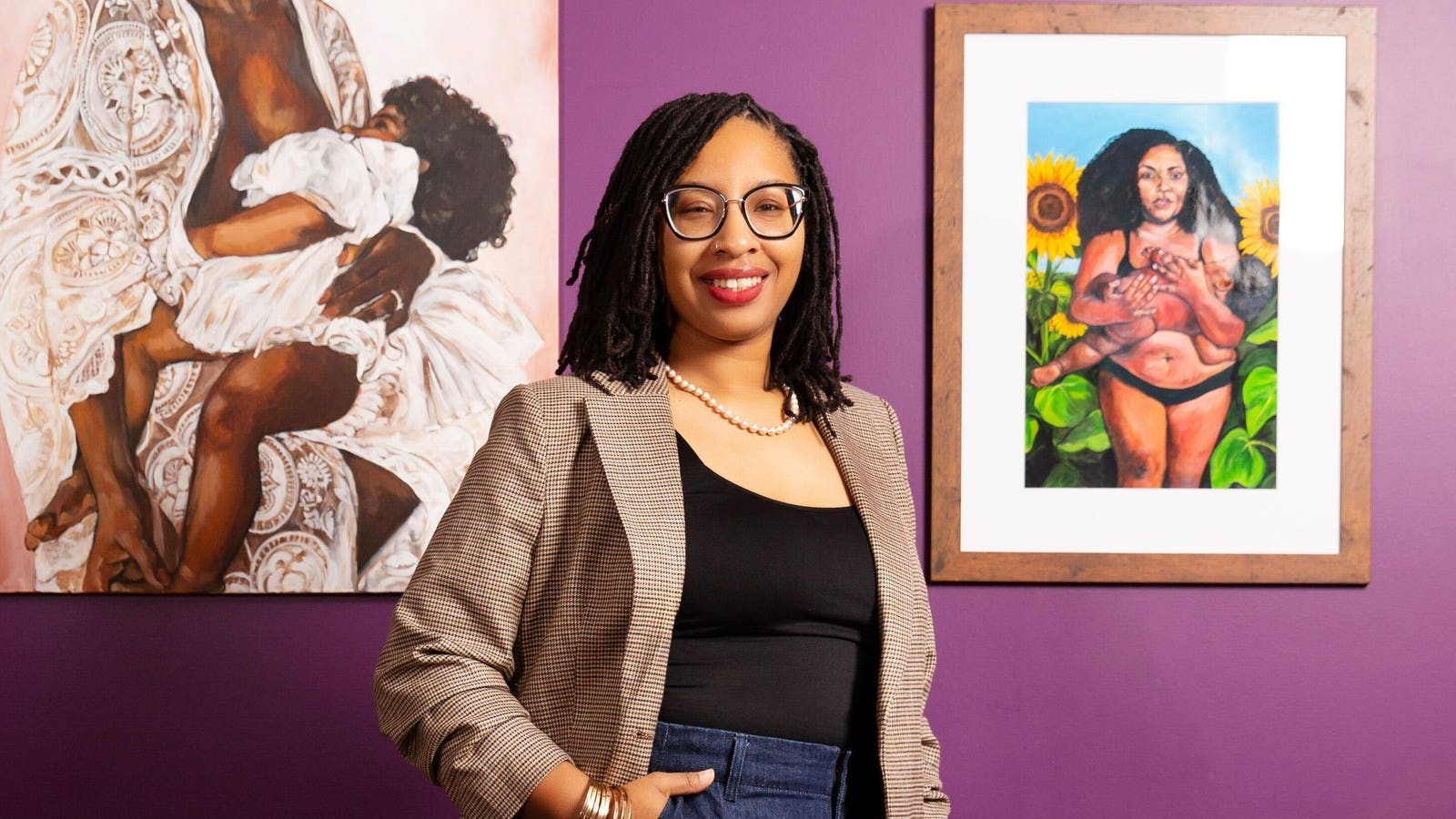
Black women in the U.S. die from pregnancy-related complications at three times the rate of their white counterparts. This gap does not care about your zip code, your college degree, or your bank account. It crosses income brackets. It ignores education levels. Aza Nedhari saw this disparity and decided to build something else. Something different. She co-founded Mamatoto Village to prove the statistics could be wrong.
Since 2015, her organization in Washington DC has supported over 4000 families.
Their record? Zero maternal deaths.
If you get the care right for Black women. You get it right for everyone.
Why Communal Care Wasn’t Optional
Ashoka sat down with Nedhari to ask why she started this. She didn’t do it to fill a bureaucratic void. It was personal.
She grew up with a community that watched over one another. Then she had a baby. And realized she had no village. The isolation was heavy. Real. That loneliness planted the seed for Mamatoto. She later met Kathryn Hall-Trujillo of Birthing Project USA. Through that connection came co-founder Cassietta Pringle.
For a year, they worked with volunteers helping teen mothers in DC. They saw strength. They also saw empty cupboards. Unstable housing. Unsafe neighborhoods. Things their small operation couldn’t fix alone. So in 2013 they started building a system that could.
The Mechanics of Zero
How do you keep a death rate at zero? You stop treating patients like medical charts.
Their program, Mothers Rising, relies on home visiting. It’s relationship-based. It’s culturally grounded. The team meets families exactly where they are—not in a sterile clinic waiting room. The support wraps around the entire family unit. We talk nutrition. Mental health during the perinatal period. Lactation support. We navigate social needs like food access or safety issues. We manage high-risk pregnancies with hands on the ground.
It’s called a Three Generations Approach. Health doesn’t stop at birth. It ripples up to grandparents and down to kids who haven’t been born yet. We break the cycle of trauma by fixing the environment. To make this work they built a custom platform that merges clinical data with social needs into one system.
Building the Workforce From Within
Nedhari is also fixing the labor shortage in healthcare. How? By training the people they serve.
Her model creates pathways for local community members. They become certified perinatal community health workers. Community doulas. Lactation consultants. There’s even a track for becoming a certified professional midwife. The training isn’t soft. It’s rigorous. Didactic lessons. Competency exams. Field hours. They’ve even pushed for national accreditation on their programs.
You’re not just getting help. You’re building a career that looks like the neighborhood you live in.
The Myths Are Killing Us
Ashoka asked Nedhari about the big lies we tell ourselves about this crisis. There are four major ones.
- It’s a poverty problem. Look at the data again. Black women with doctorates and high incomes die at higher rates than poorer white women. Money isn’t the shield people think it is.
- Better access fixes it. Having gold-plated insurance or a fancy hospital doesn’t matter if the provider dismisses your pain. Black women’s concerns are routinely underestimated. Symptoms are ignored. Good access with bad bias equals poor outcomes.
- It’s about lifestyle choices. No. This isn’t about personal failure. It’s about weathering. That term comes from Arline Geronimus. It describes the physical toll of living under racism. Your body ages faster. Your heart suffers. Your immune system takes a hit. That is structural violence. Not bad habits.
- Death is the only metric that matters. If you aren’t dead you’re fine. That logic fails us. Severe maternal morbidity includes near-misses. Hemorrhage. Organ failure. PTSD. These happen to Black women far more often. But in many places including DC they aren’t even tracked. How can you fix what you don’t count?
What Changes Actually Look Like
These myths shape policy. They dictate where money flows. They hardcode bias into provider behavior. Get the frame wrong and you build a system designed to fail certain groups.
Nedhari is looking toward 2030. Her goal is specific. A fully functioning birth and wellness center in Ward 7. The first of its kind east of the Potomac. Plus a midwifery school attached to it. This will cost between 10 and 15 million dollars.
It’s a heavy lift. It requires investment. But the vision is simple. Pregnancies that feel safe. Births that are respected. Postpartum periods that don’t end in crisis.
She wants community models like Mamatoto to become standard collaborators in healthcare systems. Not niche outliers. Because 80% of these deaths are preventable. That’s the stat that sticks. It’s not an act of God. It’s a solvable engineering problem of social justice.
The door is open. But we have to walk through it. Together. Or not at all. 🤍