


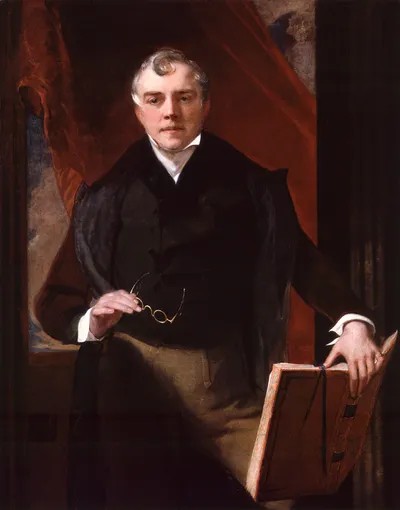
Sir Charles Bell was a Scottish anatomist who fundamentally changed how we understand the nervous system. Born in Edinburgh in November 1774, he died in North Hallow, Worcestershire, on April 28, 1842. His work earned him a knighthood in 1831 and a Royal Society medal the previous year. But his legacy rests on a specific biological discovery: the separation of motor and sensory functions in the human body.
The Magna Carta of Neurology
In 1811, Bell published New Idea of Anatomy of the Brain. Critics and historians later called this work the “Magna Carta of neurology.” It wasn’t just a textbook. It was a shift in thinking. Bell moved away from vague theories about “animal spirits” and toward concrete anatomical evidence.
He studied at the University of Edinburgh before moving to London in 1804. There, he took on surgical and teaching roles. The move placed him at the center of medical innovation. Yet, it was his later research that solidified his fame.
How Bell Distinguished Nerve Functions
Before Bell, nerves were often viewed as a single, monolithic cable. The prevailing wisdom couldn’t clearly separate the pathways for feeling from those for moving. Bell challenged this.
In his 1830 expansion, The Nervous System of the Human Body, he proposed a critical distinction. He argued that the nervous system has two distinct types of nerves:
* Sensory nerves: These conduct impulses to the central nervous system. They carry information from the body to the brain.
* Motor nerves: These convey impulses from the brain or other nerve centers to peripheral organs. They command muscles to act.
This wasn’t just theory. Bell looked at the spinal cord. He observed that the anterior (front) roots of spinal nerves were motor in function. The posterior (back) roots were sensory.
The Magendie Confirmation
Bell’s observation was bold. It was also controversial. He announced that the anterior roots controlled movement. The posterior roots handled sensation.
François Magendie confirmed this experimentally 11 years later, in 1822. Magendie’s work elaborated on Bell’s initial findings. Together, their work laid the groundwork for modern neuroscience. It clarified why we feel pain and how we respond to it.
Why This Matters Today
We take for granted the complexity of our own bodies. We move a finger. We feel the heat of a cup. We don’t usually think about the separate pathways involved. Bell’s distinction explains that separation.
He returned to Edinburgh in 1836 to accept the chair of surgery. By then, his ideas were reshaping medical education. The separation of sensory and motor nerves is no longer a radical idea. It is basic anatomy.
Yet, the elegance of that 1811 insight remains. It stripped away the mysticism of early neurology. It left us with a clearer map. A map we still use today.
What happens when that map is incomplete? We see symptoms that defy easy explanation. Bell gave us the tools to read the map. The rest is up to clinical observation.


